
Magazine Finance & Venture Capital
European Tech on track for €73 billion in investment in 2026
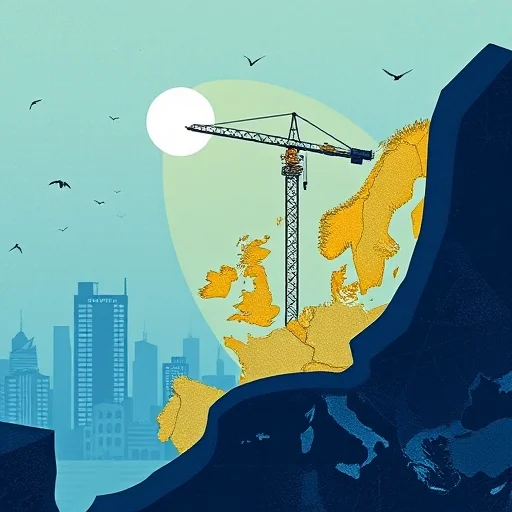
On 18 November 2026 Atomico published the 2026 edition of the State of European Tech, the annual report titled “Build it. Scale it. Own it.” that captures the state of the European tech ecosystem. The numbers tell the story of a continent bouncing back. Investment is growing again after three years of stagnation and more founders are emerging than in the United States. The European Tech ecosystem is now worth 4 trillion euros. Structural gaps remain, however, in growth capital and AI infrastructure, and the report documents them precisely.
Investment grows again: 73 billion in 2026
European startups are on track to attract 73 billion euros in 2026, a 62% increase over the 45 billion of 2025. It would be the second-best year on record, surpassed only by the 85 billion of 2021. The rebound ends a three-year stretch in which investment had hovered between 36 and 45 billion euros.
The recovery extends to early stages as well: European median Seed rounds grew 27% year on year and Series A rounds by 30%. Among the deals driving the figure is the 1-billion-euro Series D raised by the UK-based Wayve for autonomous driving AI. It is followed by the 1-billion-euro Series D of German defence startup Quantum Systems. Rounding out the picture are the 424 million euros of the Series D raised by the UK AI voice company ElevenLabs. Atomico notes that the 73-billion figure is a projection for the full year, based on data as of 30 September 2026.
Billion-dollar rounds boom, but capital is concentrated
In the first nine months of 2026 Europe recorded 13 rounds of at least 1 billion dollars, for a total of 20 billion euros. That figure represents 37% of all capital invested in the period. By comparison, only 15 such rounds in total were counted between 2017 and 2025.
The most prominent examples are the 3-billion-euro Series D of Mistral AI. The other deal is the 1.7-billion-euro Series C of Nscale. The trend also touches earlier stages, with Paris-based AMI raising 890 million euros in a Seed round. According to the report, Europe now knows how to finance enormous technological ambitions, but a disproportionate share of investment goes to a handful of companies.
European Tech counts more founders, but first funding is declining
Roughly 40,000 people started a tech company in Europe in 2026, up 36% from 2025 and 80% from 2024. The continent accounts for 29% of new tech founders worldwide, ahead of the United States at 28%. Atomico warns, however, that Chinese entrepreneurship may be underrepresented in its dataset.
AI is lowering the barrier to entry: more than 60% of founders now start out alone. There is a downside, though. Between 2021 and 2025 the number of European startups securing a first round fell by 28%. Further declines are expected in 2026. The entrepreneurial pipeline is growing faster than early-stage funding opportunities.
Tom Wehmeier, Partner at Atomico and the founder of the report, sums up the reading of the data: “We have built a world-class tech ecosystem. We simply don’t allow ourselves to believe it. The value still to be created from European tech is bigger than everything it has created so far. Nothing is missing, the capital, the talent and the demand are here, but they are blocked or badly allocated.”
The AI gap with the US
European AI investment is accelerating, but the comparison with the United States is stark. Around 18 billion euros went to European AI and computing companies. In the United States the figure is 258 billion euros: more than 14 times as much.
The gap extends to infrastructure: Europe holds about 7% of global AI computing capacity, while the US holds roughly 72%. Startups such as Mistral AI and AMI showcase the continent’s technical capabilities. But competing in frontier AI requires enormous computing resources and long-term capital. According to the report, the risk is that Europe develops world-class AI innovations while remaining dependent on infrastructure and funding controlled elsewhere.
The scaling problem
The European tech ecosystem is worth 4 trillion euros today, more than four times the 829 billion of 2017. Another 58 European companies reached billion-dollar valuations, compared with 42 in all of 2025. The fastest case is Lovable. The Stockholm startup reached 91 million euros in annual recurring revenue eight months after its first million. It then closed a 343-million-euro Series C.
Friction remains further down the pipeline. European startups take an average of 29 months to go from Series A to Series B, versus 20 months in the United States. And European pension funds allocate just 0.006% of their assets to venture capital, compared with 0.028% in America. Atomico’s message is that the continent no longer needs to prove it can create ambitious startups: the next challenge is mobilising enough capital and ensuring that more of the value generated by European Tech stays in Europe.
Sources:
Related articles
-

Payhawk raises $280M Series C led by Goldman Sachs at $2B value
Payhawk announces on November 18, 2026 a $280 million Series C led by Goldman Sachs Alternatives, at a $2 billion valuation.
-

Perry AI raises $2.2M seed to bring AI legal platform to private equity funds
London startup Perry AI has raised $2.2 million in a seed round led by Haatch for its AI legal platform for private equity funds.
-

Plural closes €1 billion fund, its largest, to back deep tech
Plural announced on Monday, November 16 the closing of its third fund, its largest to date. The €1 billion fund is worth about $1.1 billion.
-

Planky Raises €6.9 Million for AI-Powered Financial Decisioning
Planky, the British fintech company owned by BKN301 Group, has announced a €6.9 million funding round.