
Magazine Artificial Intelligence
How Scriba Accelerates Legacy Software Migration with AI
Scriba.ai uses AI agents to analyze and rewrite legacy code, delivering faster migrations, traceability, and data security.
Introduction
Legacy software migration is the key to freeing up resources and adopting modern technologies: Scriba.ai promises to automate it with artificial intelligence.
Automating migration means turning applications written decades ago into modern code while preserving business logic and reducing time and costs.
Why tackle legacy software migration
Many companies and public administrations still rely on systems born thirty or forty years ago, often modified by multiple programmers and rarely documented comprehensively.
The result is a technology debt that slows innovation: rewriting by hand is costly, while keeping the old code hinders integration with cloud and modern services.
The proposed solution: a multi-agent platform
Scriba.ai emerged from the collaboration between Algoretico and the Lagiste23 family office to offer a tool capable of analyzing and automatically rewriting legacy applications into modern languages.
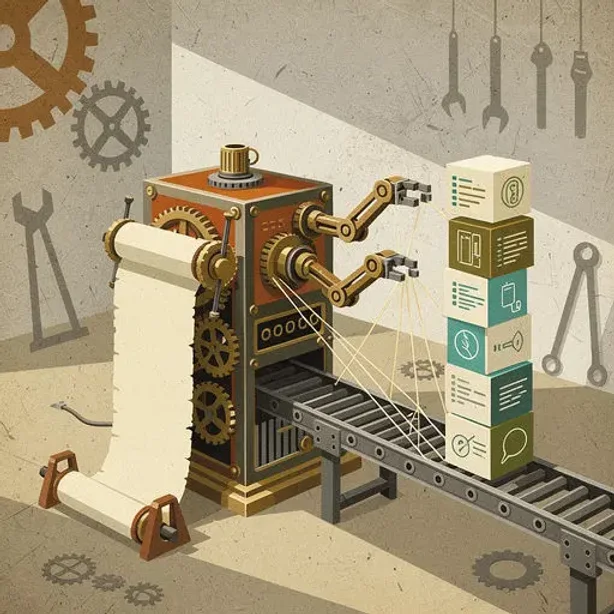
The platform is built as an orchestrated pipeline of specialized agents that perform analysis, semantic understanding, generation of the new code, and validation of functional equivalence.
The system does not translate line by line: it reconstructs the application’s structure, the relationships between modules, and dependencies to preserve business logic during the conversion.
How the pipeline works
The process begins with static and dynamic analysis of the source code to map modules, calls, dependencies, and undocumented use cases.
A coordinating component orchestrates the agents and manages the workflow to produce an equivalent version of the software in a modern language.
Validation and traceability
After generation, each segment of code is verified by validation modules that compare behavior and tests with the original version.
Each decision by the agents is tracked: this creates a verifiable audit trail of the choices made during migration, useful for auditing and future maintenance.
Scriba records the entire process: from choosing transformations to equivalence tests, to demonstrate functional parity between old and new code.
Precision, timelines and savings
According to the company, the approach dramatically reduces migration times: operations that used to take months can now be completed in days or weeks in the early analysis phases.
Estimated savings can reach up to 70% of the initial analysis and conversion costs compared with traditional manual methodologies.
Security and private AI
A differentiating element is security: Scriba does not use generalist models nor send code to external platforms, operating in private AI mode with proprietary models.
The company’s code remains under the client’s control and is not used to train external models, reducing the risk of exposing business logic.
Why this matters for startups
For a startup or a technical team, the ability to rapidly migrate a legacy stack to modern technologies creates room to integrate cloud services, microservices and CI/CD pipelines without losing the intrinsic value of the existing code.
Automated migration frees budget and technical resources, directing them toward innovation rather than maintenance alone.
Technical and organizational implications
However, the approach requires an organized process: preliminary analysis, equivalence testing, progressive releases, and team training on the migrated version are essential steps.
Adopting automated migration without internal governance leads to operational risks; it is necessary to integrate automated tools with established DevOps practices.
Technology reduces manual work but does not replace the team’s responsibility: validation, rollback plans, and governance remain essential for every migration project.
A critical perspective
The first element to assess is the actual ability of AI to understand undocumented business logic: translating data structures and implicit rules requires extensive testing and stakeholder engagement.
Not all legacy applications are the same: spaghetti-code systems or hardware-specific dependencies may require significant manual intervention even after automated conversion.
A second issue concerns technological and commercial lock-in. Even though Scriba uses private AI, companies must verify contractual terms, ownership of generated code, and portability guarantees.
It is essential to negotiate clear clauses on intellectual property, code portability, and post-migration support to avoid unwanted dependencies.
Finally, the promise of cost reduction must be weighed against real cases and measurable metrics: figures like 70% should be contextualized by project type and migration phase.
Requesting proof-of-concept and measurable evaluations on pilot projects is the prudent strategy to validate ROI.
Implications for the Italian market
The involvement of Lagiste23 and the ‘Made in Italy’ dimension of the project show how the national ecosystem is seeking solutions to reduce technology dependence on the United States and China.
For Italian investors and founders, local solutions that blend AI expertise with data-security respect represent a strategic opportunity.
Practical recommendations for founders and CTOs
For those evaluating automated migration, we propose a three-step path: 1) audit and mapping of the code; 2) pilot on critical modules; 3) incremental rollout with ongoing validation.
Running a pilot proof-of-concept on low-risk components allows measuring efficiency, the quality of the generated code, and real costs before extending migration to the entire system.
Toward sustainable modernization
Modernizing the software asset is not just a technical requirement but a competitive lever: freeing resources through automation and AI can turn technical debt into a competitive advantage.
Investing in tools that maintain traceability and data security enables faster adoption of cloud, automation, and new architectures without losing control of the business core.
Conclusion: migrate to innovate
Migrating legacy software with AI-based multi-agent approaches like Scriba.ai offers a concrete path to modernize critical systems while maintaining operational continuity and code security.
For startups and businesses, the practical rule is to balance automation with governance: run controlled pilots, measure real benefits, and integrate the solution into corporate DevOps practices.
Related articles
-

Scaleway adds AMD supercomputer and Nvidia GPUs in Nordics
Scaleway will open a Copenhagen GPU Zone with thousands of Nvidia GPUs for AI training and inference, alongside an AMD supercomputer in Sweden.
-

Meta's Muse AI agent accelerates the race for autonomous software
Meta launched its Muse AI agent on September 8. The app has since passed 6.6 million downloads, speeding up the race against OpenAI and Instinct.
-

OPPO to bring Manus agentic AI to Find X10 with Agent Mode
OPPO and Manus will bring agentic AI to the Find X10 series with ColorOS 17, via AI Mind Pilot's new Agent Mode, debuting at launch.
-

Artificial Intelligence: Choosing Chips, Power and Political Strategy
Access to power is one of the factors that define the adoption of artificial intelligence.