
Magazine Finance & Venture Capital
Weekend Read: The Players' Revolt and the New Balance of Tennis Between Record Prize Money and a Cartel
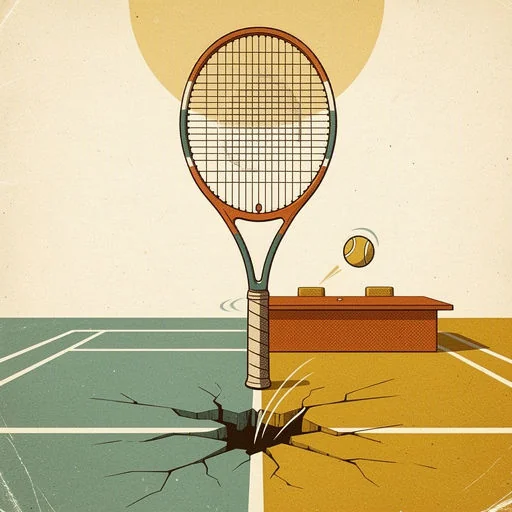
Historic prize money records in tennis are fueling a structural crisis. These events offer pricing power and governance lessons applicable to the Italian startup world as well. The conflict pits the four Grand Slams against the players, who see the current system as a cartel that limits their revenue share. Understanding this dynamic is crucial for founders and investors in the innovation ecosystem. The tennis case vividly illustrates how revenue scalability does not guarantee the alignment of interests.
The paradox of records: when the prize money is not enough to quell the revolt
London, July 12, 2026, The Crystal Palace increased Wimbledon’s prize money by 20% this year. The total reaches £64.2 million, the largest annual increase in the tournament’s history. The singles champions receive £3.6 million each. Across the four Grand Slams, prize money in 2026 will comfortably exceed $300 million. Yet, the world’s best players are openly discussing a boycott. They are suing the sport’s governing bodies for managing a cartel. This combination is the real story: record payments have not bought peace. The players are not arguing about the amount of the check, but about the fraction of revenue they receive.
The number at the heart of the dispute is 15%. This is approximately the share of tournament revenue that the Grand Slams distribute as prize money. Wimbledon’s record fund equates to about 15% of its £426.9 million in revenue. Roland Garros sits just below the same threshold. In the NBA and NFL, athletes take nearly half of the revenue. Even tennis’s own ATP and WTA 1000 events pay about 22%. The Grand Slams are the richest events in sports and the least generous. Every other number in this argument derives from that.
The hierarchy of the prize money is clear if you remove the currency noise. The US Open remains the richest prize money pool in tennis, having distributed $90 million last year. The USTA expects to increase it again when confirming the pool for 2026. Wimbledon places second with £64.2 million, roughly $86 million. First-round losers pocket £80,000, about double the UK average salary. The Australian Open ranks third, awarding a record 111.5 million Australian dollars in January. Roland Garros closes the ranking with €61.7 million, roughly $71 million.
The most revealing movement is happening at the bottom of the draw. Wimbledon increased first-round prizes by 21% and qualifying round prizes by 25% this year. Melbourne raised qualifying fees by 55% since 2023. The Grand Slams are no longer competing for champions, who show up anyway. They are competing to be seen as the tournament that keeps the world number 80 solvent. That is where the political pressure now lies.
Four tournaments, four business models
What makes the comparison genuinely interesting is that these four events sell the same product in almost opposite ways. The US Open is the maximalist. The USTA sells virtually every available surface to about 30 sponsors. It wraps tennis in three weeks of entertainment and converts New York’s corporate hospitality into the largest revenue engine in sports. It is a non-profit organization that behaves like a media company. The $90 million prize pool is the output of that machine.
The Australian Open is the innovator. Tennis Australia manages about 40 sponsors and a festive model. Melbourne monetizes fun. It is the most culturally distant from Wimbledon and the most commercially close to American sport. Roland Garros is the institution. The French federation is a non-profit that reinvests its surplus into French tennis. The FFT model is under stress. It pays the smallest champion’s check and has received the harshest criticism from players.
Wimbledon is the minimalist, and it is the most profitable per square inch of grass. It generated about £427 million with only 17 commercial partners. Scarcity is the product. The structural parallel with motorsport is hard to ignore. The Grand Slams have never needed to be saved because each owns its own rights directly. No club in the rankings of Europe’s wealthiest clubs can raise capital on Wimbledon’s terms. The Grand Slams remain assets that institutional capital cannot buy.
The internal fracture and the prize money strategy
There is a second fracture, and it is the one almost no one is writing about. The players are not a single block. Within the prize pool, money is quietly shifting from the stars to the masses. A decade ago, the Wimbledon singles champions took 17.3% of everything paid to players. This year they take 13.5%. Payments to runners-up and semi-finalists have decreased as a share. The pool for the qualifying round has nearly doubled.
This redistribution is deliberate and defensible. Lower-level professionals really struggle to cover flights, hotels, and coaches. A first-round check that covers these costs is the difference between a career and a hobby. But it means that players with the strongest voices are receiving a smaller slice of a growing prize pool. The stars are pressing for a larger share of revenue at the very moment their share of the prize money is shrinking.
The payment structure in professional tennis demonstrates that an absolute increase in revenue does not guarantee stakeholder satisfaction if the relative distribution is not perceived as fair.
The dispute stopped being rhetorical in March 2025. The Professional Tennis Players Association filed an antitrust lawsuit in New York against the ATP, WTA, ITF, and the integrity agency. The claim is that the governing bodies coordinated the suppression of player earnings. The PTPA highlights that the US Open’s revenue from a single signature cocktail exceeded the combined compensation of its two champions.
The response was notable. Both Roland Garros and Wimbledon refused to accredit PTPA officials this year. The French federation’s executive director wrote that accreditations could not be granted to any party suing them. He added that the position would change if the litigation were resolved.
Outlook and next steps
The future of tennis will depend on the ability to find a new balance between owners and talent. The Grand Slams face pressure from a global market increasingly aware of workers’ rights. The solution will require transparent negotiation and a revision of revenue distribution models. Without these changes, the risk of a real boycott remains concrete and dangerous for the entire sport.
Related articles
-

Latin America Startup Funding Up 26% as Global Fintech Deals Hit 2018 Low
Venture funding for Latin America startups reached $1.3 billion in the third quarter of 2026, a 26% year-over-year increase.
-

Enzo Ventures II, the new fund and its numbers
Enzo Ventures II: the 20 million euro Spanish fund targets pre-Seed startups from Southern European founders, with cheques of 250,000 to 600,000 euros.
-

US inflation at 3.7% sparks Asian sell-off in AI and chip stocks
US inflation at 3.7% in September sent the Kospi down 7.9% along with Asia's chip giants, with Samsung at -11.4% and SK Hynix at -12%.
-

From pickleball to AI: capital chases returns in unpriced markets
According to europeanbusinessmagazine.com, SoftBank was still seeking up to 100 billion dollars from Gulf funds to finance its bet on artificial intelligence.