
Magazine Sustainability & Green Tech
Energy automation: smart homes, silicon anodes and installers
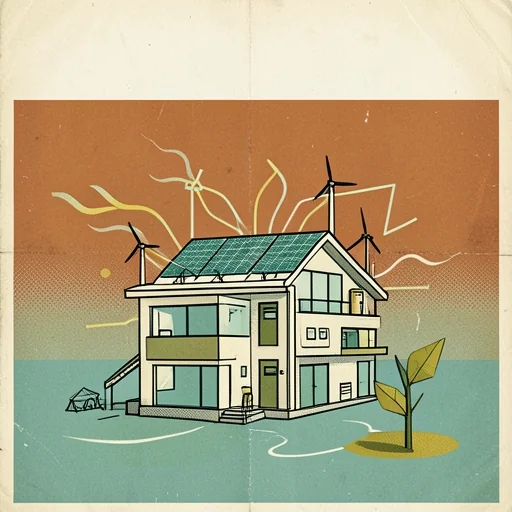
Energy automation is the thread that connects thermostats that learn routines, denser battery materials and new business models. These elements transform homes into commercial assets. Intelligent in-home controls, silicon anode battery technology and AI-native platforms for installers combine into repeatable practices for founders, investors and operators who want to design products or scale a startup in the residential energy market. Energy automation is the spine of these opportunities.
Energy automation is the thread that connects thermostats that learn routines, denser battery materials and new business models.
When energy automation cuts visible and hidden waste
Many household wastes remain invisible: heating on in empty homes or appliances on standby. Thermostats that learn routines and presence sensors turn off unnecessary loads and reduce the main bill item, heating and cooling. Energy automation makes decisions without requiring constant user intervention. For product design this means designers must prioritize reliability, safe fallbacks and clear telemetry instead of flashy features that users ignore. A practical go-to-market approach is to start from a single use case: a smart thermostat or heat pump control. Start from a single use case for launch. Offering demonstrable savings on the first billing cycle lowers customer acquisition cost. During rollout it is advisable to measure passive consumption and target the loads that drain the most energy when the home is empty.
Relying on materials: what silicon anodes change for batteries
Battery density conditions product design and the use cases of energy automation. Nexeon raised €116.7 million in the most recent round, with the National Wealth Fund committing €61.4 million. The company claims over 290 patents on silicon anode technology. Denser cells allow for more compact storage or more capacity in the same footprint, reducing the trade-off between space and autonomy in home installations. Denser cells allow more usable home capacity. For an offering that includes storage, this means being able to propose smaller batteries with the same usable energy. The presence of production already underway in South Korea and plans for capacity in the United Kingdom require planning the supply chain. The National Wealth Fund, i.e., the state fund that finances strategic projects, made explicit the strategic relevance of local capacity.
Selling through the network: the role of installers and the virtual power plant
Go-to-market models that use local channels scale faster than direct acquisition. Cloover reaches customers through independent installers and provides them financing, software and products. The company reports a revenue run rate of €301.7 million, i.e., the current annual revenue forecast based on recent sales. Cloover manages about 20,000 installations a year and aims to turn each home into a virtual power plant. Define virtual power plant: it is an aggregation of distributed systems managed as a single plant to offer flexibility to the market. Cloover does not own traditional plants; its capacity is the set of installed assets. This model lowers acquisition cost because installers keep their own brand and relationship with the customer. Local installers reduce customer acquisition cost. The platform handles underwriting, optimization and monetization of flexibility.
Concrete risks and operational steps for those building the domestic future
Integrating devices, new batteries and AI brings concrete risks on interoperability, supply chains and data. First, interoperability: products that do not communicate increase management costs and returns; a modular architecture and standard APIs are needed. Second, the supply chain: relying on a single anode supplier or on concentrated manufacturing capacity creates bottlenecks. Companies should negotiate multiple supply contracts and backup manufacturing plans to reduce risk. Negotiate multiple suppliers to avoid bottlenecks. Third, data governance: clear policies are required on ownership, monetization and explicit customer consent. To make the path operational, I propose three concrete steps. First, a technical integration checklist: interoperability certifications, fallback tests and two providers for every critical component. Second, a simple underwriting model: define risk metrics, guarantee thresholds and refund procedures, and test it on 100 pilot installations. Third, a data consent contract that separates anonymized operational data from sensitive personal data and provides remuneration for customer flexibility.
Energy automation will be the defining capability that ties these levers together.
The future will be decided on three levers. Reliable energy automation reduces daily waste. Higher-density batteries make home storage practical and go-to-market models leverage the trust of local installers to scale. Remaining open are questions on data governance, interoperability standards and local production capacity. Those who address these three variables will decide who captures the value generated by homes becoming network assets. Those who address three variables capture value. Energy automation will be the defining capability that ties these levers together.
Sources:
Related articles
-

Sustainable Innovation Across Agriculture, Health and Territory
Targeted investments strengthen regional attractiveness and can generate a cascading impact.
-

How to make self-produced energy investable
Storage systems must absorb at least 75% of the energy produced by the connected plant, a condition that favors integrated production-and-storage projects.
-

Sustainability and Community as a Product: Strategies for Impact
Campaigns that link product and social value shift attention from ownership to collective action.
-

Kylian Mbappé joins On and the rise of verified carbon accounting
At the same time the market for carbon accounting software is exploding because regulators demand verifiable numbers.