
Magazine Policy & EU Innovation
Europe Energy Innovation: Scaling Up for Autonomy
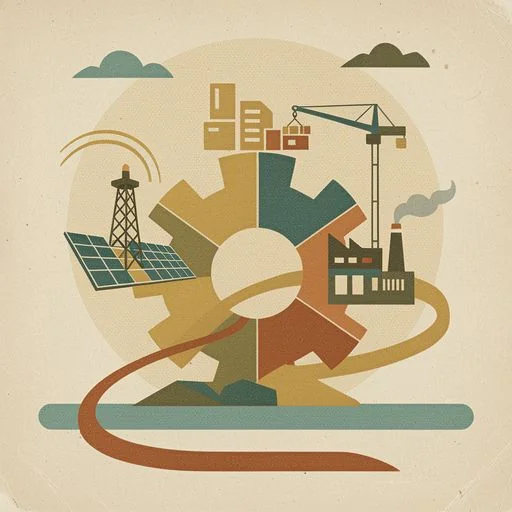
Europe energy innovation positions itself today as the strategic answer to an era of profound transformations. It intertwines the energy transition, the strengthening of industrial autonomy, and sustainable urban revitalization. This scenario requires a strategic rethink that transcends individual sectors. It promotes an integrated approach to innovation. The urgency to decarbonize the economy clashes with the need to strengthen internal supply chains. It also stimulates the growth of new industries and the application of advanced technologies. These improvements enhance the quality of life in cities and communities, aligning with Europe’s energy goals.
Europe energy innovation positions itself today as the strategic answer to an era of profound transformations, intertwining the energy transition, the strengthening of industrial autonomy, and sustainable urban revitalization.
The continent is responding to these pressures through a series of initiatives. It ranges from direct support for new productive chains, such as bio-based chemistry. It also promotes novel collaboration models between startups and large companies. Parallelly, regional and community funding programs facilitate technology transfer from research to industrial application. Urban transformation is also encouraged according to principles of sustainability, inclusivity, and beauty. This synergy between industrial policy, technological innovation, and territorial development outlines an ambitious path for Europe. It aims at turning crises into catalysts for lasting and autonomous progress.
The European Energy Conversion: Lessons Learned for the Future
Europe faces a second opportunity in the energy transition. It partly missed the first, despite significant technological development. Between 2010 and 2023, the levelized cost of solar energy fell by about 90%. Lithium-ion battery pack prices dropped by about 93%. These extraordinary data should have positioned Europe as a leader in clean technology production. It should have contributed significantly to their development. Instead, China now accounts for over 80% of each stage of solar panel production. Over 95% of installed panels in the EU are imported, underscoring a large-scale loss of manufacturing capacity.
An emblematic example of this difficulty is Northvolt. This company was once valued at $12 billion. It raised over $15 billion from investors such as Volkswagen, Goldman Sachs, and Microsoft. Despite the ambition, in 2023 Northvolt delivered less than 1% of its planned 16 GWh capacity. By March 2025, it filed for bankruptcy. According to Bruegel, a Brussels-based economic think tank, Northvolt’s troubles represented a significant wake-up call for the European CleanTech industrial strategy. This highlights how venture capital alone is not enough to build factories without adequate industrial scale-up infrastructure. The lesson is clear: Europe had ambition, skills, technology, and significant capital. However, it lacked the necessary industrial infrastructure to transform hard technology.
The Rise of Bio-based Chemistry: The Catalyxx Case in Portugal
The transition toward a more sustainable economy gains significant acceleration with the development of bio-based chemistry. This is demonstrated by Catalyxx, a Spanish startup. It transforms bioethanol into alternatives to fossil-origin industrial chemicals. Catalyxx chose Sines, in Portugal, for its first commercial-scale production facility, a €120 million investment. The initiative is supported by a combination of private investments and public funding. This includes €20 million from the Circular Bio-based Europe Joint Undertaking, a European public-private partnership. This funding will help reduce emissions and strengthen European chemical supply chains. This is a strategic objective for the continent.
The project follows preceding demonstration-scale financing and development phases. Among these, €3 million were allocated to its technology center in Seville. A €37 million pre-approval came from the European Investment Bank for a proposed plant in France. The choice of Sines underscores the importance of support from local and national authorities. These include the Portuguese Trade and Investment Agency (AICEP – Global Parques ZILS). This support is crucial in realizing projects of this scale. This development fits into a broader, though still selective, stream of European financing in the bio-based chemistry and industrial biomanufacturing sector during 2026. EU-Startups recorded about €58 million across eight adjacent transactions. This brings the indicative total, including the Catalyxx premium, to around €78.3 million. This funding supports the development of fermentation-derived pigments, cellulose-based industrial ingredients, circular carbon molecules, and bacterial cellulose materials.
Accelerating Innovation Through Industrial Co-Creation
To overcome challenges related to industrial scale-up and validation of new technologies, Europe innovation is investing in innovative collaboration models. An example is the Co-Creation Accelerator 2026–2027 by 28DIGITAL. This four-month program is specifically designed to connect early-stage startups with industrial partners. Startups must have a technology maturity level (TRL) of 4-5 and higher. The TRL, or Technology Readiness Level, assesses technology maturity. TRL 4-5 indicates verification in a laboratory-relevant environment. The aim is to jointly develop solutions that address concrete market challenges. This is not a traditional accelerator. It is an execution-oriented program based on real industry-proposed challenges.
Participating startups can receive up to €250,000 in funding. There is no requirement for co-financing, in exchange for an equity stake. The program is structured into two tracks. The Open Challenge Track allows startups and industrial partners to jointly define the challenge. The Industry Challenge Track allows startups to apply for predefined challenges reflecting sector needs. Applications for Industry Challenges are accepted on an ongoing basis. In addition to funding, startups benefit from direct collaboration with industry leaders. They also receive assistance in capital raising and access to intensive training. This is provided through exclusive programs like 28DIGITAL Speed Master and MentorMe. This increases their visibility within the European innovation ecosystem.
The Crucial Role of Regional Technology Transfer
Technology transfer is a fundamental pillar to capitalize on research results. It turns them into concrete industrial applications. This is highlighted by the Emilia-Romagna Region with Giunta resolution no. 1221 of 20 July 2026. This initiative aims to support technology transfer projects. These projects valorize and industrially apply research results already achieved. The action aligns with the challenges and trajectories identified by the Emilia-Romagna Smart Specialisation Strategy. This policy document defines research and innovation priorities for regional economic development. The goal is to facilitate the transfer of knowledge, technologies, prototypes, methodologies, or solutions developed in research. These are then applied in companies, strengthening their innovative impact on relevant supply chains.
The call targets micro, small, and medium-sized enterprises (SMEs). These are defined by European Commission Recommendation 2003/361/EC. It provides a total budget of €3,000,000. Regional contributions are grants. They cover up to 50% of eligible costs for technology transfer activities. They cover up to 25% for experimental development activities. Applications could be submitted from 24 September to 30 October 2026. This indicates a funding process with defined deadlines to stimulate innovation at local and regional levels. This type of support is crucial for SMEs. They often lack internal resources to translate research into marketable products or processes. It provides an essential bridge between academia and industry.
Innovation for Sustainable Urban Spaces: The New European Bauhaus Initiative
The Connect & Co-create NEB 2027 initiative is promoted by EIT Urban Mobility. It coordinates the EIT Community New European Bauhaus. This embodies Europe’s ambition to link the European Green Deal to daily life. The EIT, or European Institute of Innovation and Technology, is an EU body promoting innovation across Europe. Through this initiative, it promotes the creation of sustainable, inclusive, and aesthetically high-quality places. This call offers two complementary funding opportunities for European organizations engaged in transforming neighborhoods. Connect NEB supports community-led initiatives to test new ideas, involve citizens, and develop participatory approaches, living labs, and new governance forms inspired by the New European Bauhaus (NEB).
Co-create NEB, on the other hand, supports partnerships between communities, city administrations, and other local actors. It aims to realize concrete and visible transformations of public spaces. The initiative, with applications open until 30 September 2026, aims to support the transition from ideas and participation to practical realization of projects. Each selected project will receive an EIT contribution of €15,300 in the form of a fixed grant. The EIT Community NEB, which includes EIT Food and Climate KIC, supports local innovation, citizen involvement, and entrepreneurship. This demonstrates how the vision of a sustainable future translates into concrete actions at the local level. These programs are essential to translate large political visions into tangible impacts.
Outlook and next steps
The difficulties Europe faces in creating a large-scale CleanTech industry are evident. This is shown by dependence on solar panel imports and Northvolt’s failure. These issues are directly linked to the need for programs like the Co-Creation Accelerator and Technology Transfer Projects. These tools aim to bridge the gap between early-stage innovation and industrial application. They provide the financial support and partnerships necessary for scale-up. Without a robust infrastructure to take “hard” technologies from prototype to mass production, Europe risks continuing to lose competitive advantage in key sectors of the ecological transition. The Catalyxx story secured significant funding and chose a European site for its bio-based chemistry plant. This shows that with the right mix of capital, public support, and industrial collaboration, it is possible to build new strategic production chains. These chains reduce dependence on fossil fuels and strengthen the continent’s supply-chain autonomy. Parallel to this, the New European Bauhaus initiative completes this framework. It integrates industrial sustainability with quality of life and urban regeneration. This shows that ecological transition is not only a technological issue but also a social and cultural one.
A critical point to consider is the balance between political ambition and the capacity to execute industrially. Europe has demonstrated strong political will through the Green Deal and funding for initiatives like the New European Bauhaus and bio-based chemistry. However, its ability to translate these ambitions into large-scale manufacturing leadership has been questioned. Fragmentation of funding, bureaucratic complexity, and the lack of an integrated ecosystem that supports scale-up, not just research and development, can hinder the full potential of these initiatives. It is essential that co-creation and technology transfer programs are not only well funded but also agile and results-oriented. This will prevent Europe’s “second opportunity” in the energy transition from turning into another missed chance.
Overall, the data and initiatives analyzed outline a Europe committed to a deep transformation. Awareness of missed opportunities in the past, such as in the solar and battery sectors, drives this commitment.
Related articles
-
Horizon Europe Bridging Actions 2027: €20M for project results
The Horizon Europe Bridging Actions 2027 call puts €20 million into valorising research results: proposals are due by 16 February 2027.
-
EU Innovation Fund backs 20 startups in €3.4B net-zero awards
The European Commission selects 77 net-zero projects for 3.4 billion euros from the Innovation Fund: 20 involve startups, about 26% of the total.
-
Horizon Europe 2027 Cluster 4 calls: €496M for industry and AI
The European Commission has opened the Horizon Europe 2027 calls of Cluster 4: five invitations with budgets up to €224.7 million, deadline 2 February 2027.
-

European technological sovereignty still runs on American chips
European technological sovereignty is still more of a goal than a fact: the Mistral and Aleph Alpha models still depend on American chips.