
Magazine Technology & Innovation
Governance and Localized Compute Infrastructure in Italian Startups
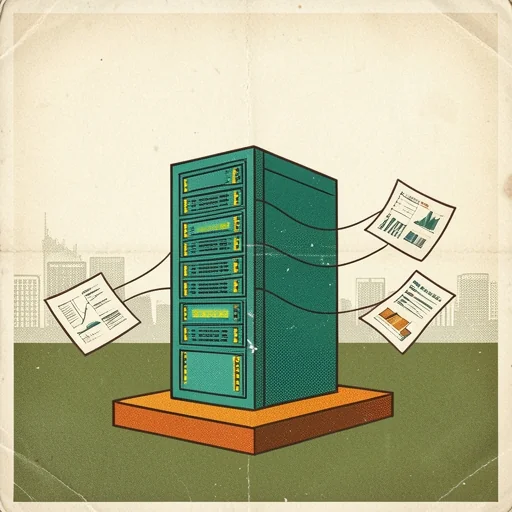
L’ecosistema delle startup italiane affronta una realtà in cui normative severe, logiche energetiche e dinamiche di mercato si intrecciano per ridefinire le regole della competitività globale. Oggi più che mai, l’innovazione tecnologica non è soltanto una questione di algoritmi o di hacking di prodotto. È una questione di governance. È una questione di localizzazione delle infrastrutture compute e di domanda reale che trasformi l’investimento in valore tangibile. Il focus è spostato su come le aziende possano operare in un contesto di sanctions dinamiche, sfruttando reti di data center efficienti e collegando la proposta tecnologica a mercati capaci di fornire reddito stabile. In quaderno di riflessioni che arriva da tre fonti distinte emergono una serie di lezioni comuni. La necessità di governance robusta serve ad affrontare restrizioni internazionali. La centralità di una gestione energetica e di raffreddamento intelligenti è essenziale per la scalabilità e c’è tensione tra innovazione tecnologica e reddito operativo. L’obiettivo è costruire una narrazione di valore che aiuti founder, operator e investitori a orientarsi verso scelte concrete, misurabili e sostenibili nel medio termine.
L’ecosistema delle startup italiane affronta una realtà in cui normative severe, logiche energetiche e dinamiche di mercato si intrecciano per ridefinire le regole della competitività globale.
La tripla lente mette a fuoco tre dimensioni complementari. Da una parte, la regolamentazione non è solo un vincolo. Può diventare una leva di credibilità se accompagnata da governance capace di isolare dipendenze critiche e garantire trasparenza nelle catene di fornitura. Dall’altra, la localizzazione delle infrastrutture compute e l’uso di contratti a lungo termine offrono stabilità di costo e resilienza operativa, elementi chiave per la monetizzazione di progetti di IA su larga scala. Infine, i mercati reali, come indicato dall’andamento del FTSE 100, mostrano che una base di reddito stabile, insieme a una governance disciplinata, sostiene una crescita sostenibile in tempi di volatilità. Integrare questi assi non significa rinunciare all’innovazione: significa progettarla dentro una catena del valore affidabile e orientata a risultati concreti.
Introduction to the three sources and their interweaving. A first evidence concerns the scope of sanctions. The European Union could include more than 1,600 companies in a package of restrictions. These companies have combined revenues above $20 billion and over 265,000 employees. The impact is not only numerical. The emphasis concerns how crucial it is that companies be cut off from financial, insurance, technological circuits and the European market. Member states must apply the restrictions rigorously with no unnecessary exemptions. In parallel, concrete streams emerge from infrastructural innovation. AI Infrastructure Capital AG closed a round of about €16 million to purchase NVIDIA servers. This allows positioning them in data centers powered by renewable energy and offering compute capacity through multi-year contracts. Finally, the traditional market context provides another compass. The FTSE 100 reached new highs driven by energy, mining, defense and consumer goods. This shows that in times of uncertainty real assets and disciplined governance remain pillars of resilience. Together, these dimensions tell a common narrative: sustainable innovation requires an ecosystem that combines compliance, well-located compute infrastructure and real demand that rewards operational stability.
Targeted sanctions, governance and resilience in European companies
What is the operational stake of a massive extension of the European blacklist toward companies tied to the Russian vase? According to the findings, Brussels is planning a package that could include over 1,600 companies, with aggregate revenues above $20 billion and more than 265,000 employees. If approved, the number of sanctioned entities would rise by about 50% compared to current lists. In practical terms, the real impact is not merely punishing individual companies. It is a redefining of supply chains, access to capital, markets of sale and, above all, internal governance. Companies that have invested in traceability, audits and management of technological dependencies are better positioned to negotiate with investors and international partners. However, implementation of sanctions has shown contradictions. Tactical exemptions have allowed logistic partners or strategic supply chains to remain operational, highlighting a fundamental vulnerability between political objective and immediate economic impact. For founders, the lesson is clear: regulatory compliance becomes a leverage of credibility if accompanied by governance capable of isolating critical dependencies. This implies maps of technological dependencies, contingency plans and security audits that transform compliance into perceivable value for investors and partners.
Critically, a fundamental question arises: measures, however extensive, risk stifling innovation if not accompanied by flexible implementation tools. Italian startups should therefore invest in advanced governance and resilience practices that make evident to financiers the capacity to respond to evolving regulatory scenarios. In the end, compliance is not just an obligation. It is a differentiating lever that increases international credibility and can open doors to disciplined financing based on sustainability and transparency criteria. If the Italian ecosystem wants to benefit from this dynamic, it is essential to build a map of dependencies that allows mitigating regulatory shocks, reducing volatility and uncertainty.
Compute infrastructure, energy localization and long-term contracts
Managing compute infrastructure is evolving from a mere efficiency logic to a strategic localization choice. An emblematic case is Swiss AI Infrastructure Capital AG, a young Swiss entity. It closed a round of about €16 million to purchase NVIDIA servers. It positions them in data centers powered by renewable energy and offers compute capacity through multi-year contracts. The operation concentrates hardware in Iceland, where the combination of renewable sources and external air enables passive cooling that reduces operating costs relative to traditional centers like Frankfurt or Dublin. This choice is not random. The local availability of clean energy and favorable climatic conditions transform compute infrastructure into a strategic asset. It offers lower management costs and operational stability that reassures ESG investors and technology partners. Practically, you don’t just buy hardware. You build an energy, cooling and capacity contract ecosystem on a multi-year basis, with governance of the energy supply chain oriented toward resilience.
For Italian startups, the Icelandic example offers concrete indications. Localizations in areas with abundant renewable energy and favorable climatic conditions can translate into meaningful long-term savings. Not only on energy costs, but also on stability against price hikes and supply disruptions. Long-term capacity contracts reduce demand and price volatility. They provide a predictable basis for defining go-to-market models and large-scale AI roadmaps. This strategy goes beyond purely technological aspects. It represents a governance choice of the energy supply chain that increases credibility in the eyes of investors sensitive to climate and operational risk. The result is a compute infrastructure platform that is not just a cost, but a catalyst for concrete use cases, accelerating monetization with a clearly trackable long-term strategy.
A critical reading adds that governance of the energy chain and resilience clauses are essential elements for sustained growth. An energy audit and transparency on consumption and efficiency become competitive requirements, because they demonstrate to stakeholders that the infrastructure is reliable even in volatile scenarios. In this way, companies can build a benchmark platform for large-scale AI projects, able to operate in competitive markets without depending on intermittent suppliers or unpredictable price flows. The investment in data centers is not merely an operating expense. It is an accelerator of utilization prices, a lever for monetizing use cases and a base for a sustainable growth roadmap. The integration of energy, cooling and contracts defines a concrete value proposition for investors oriented to sustainability and measurable impact.
Real markets, stable income and operational resilience
The third axis concerns anchoring innovation to real markets with stable income and disciplined governance. The FTSE 100, a London reference index, reached new highs supported by traditional sectors such as energy, mining, defense and consumer goods. This context highlights a crucial lesson for Italian startups: in periods of volatility, having a recurring revenue base and consolidated governance helps mitigate the impact of technological fluctuations. The lesson is twofold. On one hand, real profitability and disciplined cash flow management become key elements to monetize in the medium-to-long term. On the other hand, integrating offering with networks of tangible goods and essential services creates a stability base that facilitates access to long-term financing. This balance between intangible innovation and real income allows companies to grow even when AI adoption does not progress linearly, or when cost of capital becomes more onerous.
The fusion of well-designed compute infrastructure, reliable governance and market presence creates a pipeline of opportunities for mission-aligned venture capital. For the Italian ecosystem, it means building a value chain that integrates compliance, strategic compute infrastructure and real demand capable of rewarding reliability, scalability and the ability to generate tangible value. In closing, the set of experiences described paints a coherent story. Well-designed regulation can become a lever of credibility and access to capital. Compute infrastructure localized in energetically favorable areas offers operational stability. Real demand is supported by robust traditional markets. It makes innovation less subject to market waves and more ready to translate into measurable impact.
Common causes and opportunities
If we look at the three dimensions together, a clear correlation emerges: regulatory, energy and market conditions are three sides of the same resilience coin. Careful governance facilitates rapid adaptation to sanctions and opens doors to targeted financing, reducing uncertainty for investors and partners. Localized compute infrastructure with renewable energy and long-term contracts reduces cost volatility and increases predictability, facilitating the scalability of AI projects. Finally, real and stable demand from well-established markets provides a monetization base and a feedback channel to iterate products and models in a measurable way. These elements, combined, sketch a possible path for Italian startups. Build a value chain that is not only technological, but governance-driven, energetically sustainable and anchored to concrete markets. It is a path that reduces perceived risk, increases credibility and creates favorable conditions for long-term investments.
Perspectives and next steps
a synthesis to build trust, capital and growth Taking a page from the three-source framework means acknowledging that innovation is not a lucky break, but an integrated practice. Targeted sanctions show that governance and traceability become strategic assets, as well as regulatory obligations. Compute infrastructure, when localized in places with renewable energy and managed with multi-year contracts, offer operational stability and long-term competitive margins. Real markets, represented by indices like the FTSE 100, show that a composition of concrete assets and solid governance can act as an anchor in times of crisis and volatility. For an Italian founder, the common reading is clear: investing in a value platform that integrates compliance, compute infrastructure and presence in real markets does not mean giving up on innovation. This approach provides a more robust, scalable and financially sustainable form. The challenge is operational: translate this vision into concrete business models, with measurable impact metrics, clear contracts and governance capable of navigating evolving regulatory and market scenarios.
Looking ahead, the opportunity is clear: to drive the growth of AI projects and digital solutions within a framework of responsibility, energy efficiency and commercial solidity. Companies that manage to align compliance, compute infrastructure well localized and real demand will find a path to transform innovation into sustainable value. The growth trajectory will not depend solely on technological spikes. It will depend on the ability to deliver concrete results over time. For the Italian ecosystem, this is a call to action. Build partnerships, invest in efficient data centers and set up business models that can coexist with the rules of the global context, without losing sight of market realities. In this way, innovation becomes not only a promise, but a verifiable and repeatable reality, capable of generating value for entrepreneurs, investors and the entire startup ecosystem.
Sources:
Related articles
-
Technological scalability in practice: Oshen, Eyedentity and Redfaire
Technological scalability is the lens through which to read three concrete cases that tell how a prototype becomes an operational and commercial infrastructure.
-

Designing metrics that preserve resilience and long-term value
Metrics decide what gets built and funded: how to design measures that reward resilience and long-term value, and validate them independently before scaling.
-

AI-driven innovation across health, security, and agriculture
AI-driven innovation converges across health, security and agriculture: what the data and the venture money say, and where founders can still find room.
-

Google Cloud Powers Integrated AI and Robotics Ecosystem
The expansion of Google Cloud serves as a key component in this integrated ecosystem, enabling physical AI and robotic use in the real economy.