
Junto Magazine Category
Technology & Innovation
44 articles
-
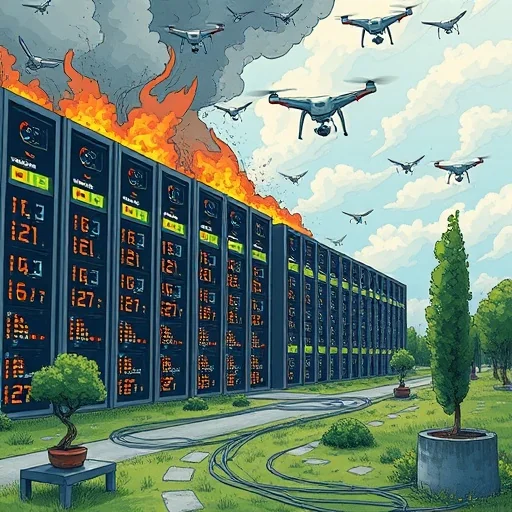
From Sasovo to Milan, data centers are targets and battlegrounds
In 2026 data centers became military targets, from Amazon in the Gulf to Yandex in Russia, while Italy speeds up their permits by decree.
-

How De Beers and TVB Turn Documented Customer Trust Into Value
De Beers scans 5 million diamonds and invests 70 million dollars in Botswana, while TVB wins 28 awards: customer trust gets documented.
-

Asia Builds Its Digital Future From Okinawa to Hong Kong
Asia rebuilds its digital foundations: Wi-Fi 7 in 24 schools in Okinawa, formative AI at NUS, Hong Kong the world's freest economy again.
-

Risultati principali del sondaggio
Risultati principali: The question of whether founders and family can coexist becomes concrete after a new international survey.
-

Technological scalability in practice: Oshen, Eyedentity and Redfaire
Technological scalability is the lens through which to read three concrete cases that tell how a prototype becomes an operational and commercial infrastructure.
-
Designing metrics that preserve resilience and long-term value
Metrics decide what gets built and funded: how to design measures that reward resilience and long-term value, and validate them independently before scaling.
-
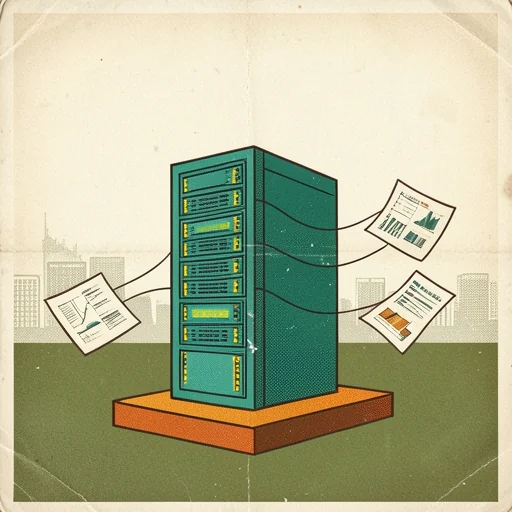
Governance and Localized Compute Infrastructure in Italian Startups
Compute infrastructure localized in energetically favorable areas offers operational stability.
-

AI-driven innovation across health, security, and agriculture
AI-driven innovation converges across health, security and agriculture: what the data and the venture money say, and where founders can still find room.
-

Google Cloud Powers Integrated AI and Robotics Ecosystem
The expansion of Google Cloud serves as a key component in this integrated ecosystem, enabling physical AI and robotic use in the real economy.
-

Aerospace manufacturing and energy in orbit: two Italian paths toward a new industrial frontier
The evolution of aerospace manufacturing in Italy is becoming a crossroads of high level expertise, venture capital, and public private support policies.
-

Energy Infrastructure for AI: The Skeleton Technologies Case and the €33 Million Pre-IPO
Skeleton closes €33 million to expand supercapacitors and cut AI data center energy use, targeting a U.S. IPO in 2027 for growth.
-

Hybrid quantum computing for enterprises: how SAS is making the future accessible
SAS Quantum Lab brings hybrid quantum computing to Viya for enterprises, enabling 100x speedups and practical adoption support.
-

City of Innovation in Milan: Inside MIND and Its Ecosystem
City of innovation in Milan: a practical guide to the MIND model, key players, and opportunities for startups and research.
-

NASA Spacesuits Delays: Risks, Opportunities, and Artemis Impact
Delays and supplier dependence: how NASA spacesuits shape the Artemis program's supply chain, markets, and procurement strategy.
-

High-Temperature Chip: 700°C Memory for Exploring Extreme Environments
A functional memristor beyond 700°C opens space for exploration and industrial applications: materials, limits, and opportunities.