
Magazine Sustainability & Green Tech
Smart Energy Infrastructure in Italy Reaches €460 Million in 2025
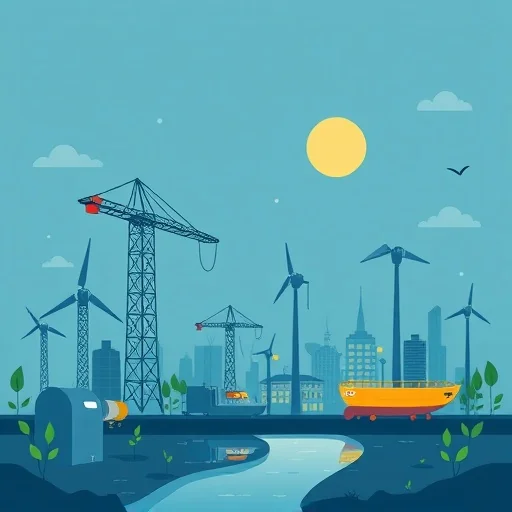
Smart Energy Infrastructure in Italy are worth 460 million euros in 2025, growing 21% over the previous year. That is what emerges from the research by the Digital & Smart Infrastructures Observatory of the School of Management of Politecnico di Milano, presented on 6 November 2026. The sector is the leading segment of the Digital & Smart Infrastructure market, which overall reaches 1.36 billion euros, up 16%.
Electricity, water and gas networks: where Smart Energy Infrastructure are applied
The term Smart Energy Infrastructure refers to energy infrastructures equipped with digital technologies: sensors, connectivity, data management platforms and analytics algorithms. These are not new civil works, but the intelligent layer added to existing assets that transforms how they operate. The goal is to know the status of every network component in real time. This information is used to decide where to intervene, when and with what priorities.
The areas of application coincide with the three main families of networks in the energy system. In electricity networks, the most relevant segment, digitalization mainly concerns primary and secondary substations. Substations are increasingly remotely controlled. Digitalization also covers the management of flows generated by renewable plants. In water networks, digital technologies enable the automation of dams and aqueducts and the continuous monitoring of distribution systems. The goal is to reduce losses and ensure service continuity even during droughts. In gas networks, from transmission pipelines to city distribution, solutions focus on predictive monitoring, which detects anomalies and faults before they become outages or safety risks.
The technologies that make a network intelligent
The Observatory identifies five enabling technologies. The Internet of Things is the starting point. Sensors along the networks measure voltage, pressure, flow and vibrations. They transmit data to control centers. Artificial Intelligence interprets it, recognizing patterns and anomalies that would escape the human eye, with applications in predictive maintenance and in forecasting demand and renewable production.
A Digital Twin is a digital replica of the infrastructure, continuously updated with field data. It allows scenarios such as a heat wave or the failure of a component to be simulated without affecting the actual plant. Edge computing moves processing close to the assets, so decisions are made on site and only essential information travels to central systems. Finally, Physical AI interacts directly with plants. At an oil & gas facility in Northern Italy, Baker Hughes cut fuel consumption by 2%. According to the Observatory, this is an area where Italy, with its leadership in mechanics, can play a leading role.
The market’s value and who finances it
The Italian intelligent infrastructure market reaches 1.36 billion euros in 2025. In addition to Smart Energy Infrastructure (460 million, +21%), Smart Railway weighs in with 320 million (+12%), driven by RFI’s investments in digital signaling and predictive maintenance, and Smart Road with 240 million (+17%). Funding comes from three engines. The first is PNRR projects, accelerated ahead of the Plan’s deadline. The second is the European Connecting Europe Facility program; the third is investments by operators, both public and private.
Internationally, the Observatory has tracked 153 Smart Energy Infrastructure projects. Their share of total digital initiatives rose from 13% in 2022 to 24% in 2025. The 52% concern the electricity sector, the 28% water and the 20% gas. Among the examples: in Brazil, AI manages 74,000 kilometers of transmission lines, while in Qatar the IoT supports offshore infrastructure planning. In Italy, the Tyrrhenian Link stands out, connecting Sicily, Sardinia and Campania with nearly a thousand kilometers of submarine cables. The project integrates connectivity, AI and Digital Twin.
Cybersecurity, data sovereignty and OT-ICT integration
Digitalization brings clear benefits, but also three main challenges. The first is Cybersecurity: energy, transport and water networks are among the highly critical sectors, increasingly exposed to cyberattacks. Europe intervenes with the NIS2 directive, which requires risk management measures, and also with the Cyber Resilience Act, which calls for secure-by-design digital components. For operators, this means protecting the point of contact between corporate IT systems and the systems that control plants.
The second is data sovereignty: many countries do not want to export critical data about their infrastructures. This is the case of Algeria, which covers a significant share of the gas imported by Italy. Here edge computing becomes decisive, because data remain where they are generated. The third challenge is the integration of OT and ICT systems: energy networks contain machinery from different eras with incompatible protocols, whose data remain isolated. The emerging solution is middleware software that acts as a translator between plants and IT systems. It makes data usable without replacing legacy equipment.
The value shifts from cables to data
The strategic challenge progressively shifts from the technical management of the physical infrastructure to the ability to leverage data from different sources. This is needed to develop value-added services and make faster decisions. Utilities have the size and skills to lead the change, starting from the most critical networks. As Damiano Frosi, Director of the Digital & Smart Infrastructures Observatory, pointed out during the conference presenting the results:
Infrastructure, historically a physical and static asset, is transforming into a digital, dynamic and interconnected platform. Whereas in the past the value of a work was measured mainly by its size and structural solidity, today the new competitive frontier lies in the ability to make it intelligent through software and data.
According to the research, the value of future energy infrastructure will be measured less and less in kilometers of cables. What counts more and more is the quality of the data that networks will be able to generate and put to use.
Sources:
Related articles
-

Sustainable Innovation Across Agriculture, Health and Territory
Targeted investments strengthen regional attractiveness and can generate a cascading impact.
-

How to make self-produced energy investable
Storage systems must absorb at least 75% of the energy produced by the connected plant, a condition that favors integrated production-and-storage projects.
-

Sustainability and Community as a Product: Strategies for Impact
Campaigns that link product and social value shift attention from ownership to collective action.
-

Kylian Mbappé joins On and the rise of verified carbon accounting
At the same time the market for carbon accounting software is exploding because regulators demand verifiable numbers.