
Magazine Mobility & Smart Cities
Urban Innovation: Integrating Architecture, Health Tech and Finance
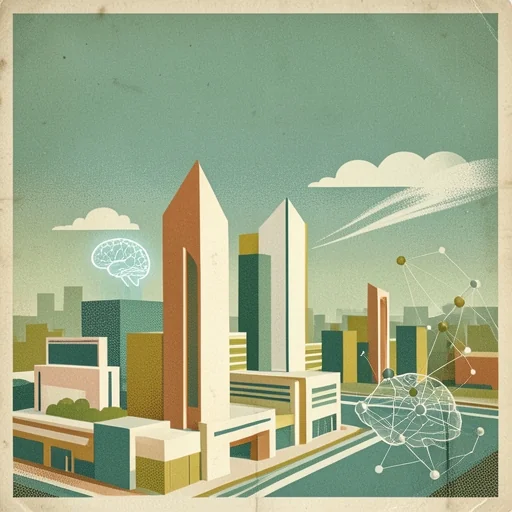
Urban innovation spans projects ranging from iconic architecture to medical imaging, from tokenization of funds to the network of global cities. Design, healthcare technology, financial instruments and relationships between cities combine, reshaping city planning, population care and capital mobility, and opening concrete opportunities for founders, investors and operators in the urban innovation ecosystem.
When architecture meets hospitality and cultural experience
Building iconic places can become the cultural and commercial lever for a city. Morpheus, the hotel designed by Dame Zaha Hadid, was recognized with Three MICHELIN Keys, the highest level of the guide that evaluates 2,832 hotels worldwide, of which 155 hold Three Keys. An iconic building can attract high-quality tourism and raise service standards. The structure is the first skyscraper with a free steel exoskeleton, and combines luxury accommodation, starred restaurants and immersive art to rethink urban hospitality.
This design ambition dialogues with the approach of entrepreneurs who transform homes and hotels into life platforms. Somchai Akkarawittayapoom founded Arkitektura after a career in technology and owns Mappage®, a technology protected by six US patents. Design innovation starts from real user needs. Somchai’s experience shows how technological skills can scale in the furniture sector and projects. Somchai demonstrates how scalability produces an offering that ranges from standalone products to hospitality solutions and large-scale projects.
Designing spaces means designing behaviors, a statement that synthesizes the shift from beautiful to functional.
This intersection between architecture and service is a useful example for those thinking about urban projects. Memorable design and replicable service systems are needed to create local value and attract investment.
Extended medical technologies and the new geography of healthcare
Diagnostics that image the whole body at once change how cities care for their inhabitants. HKSH Medical Group introduced Hong Kong’s first ultra-long axial field PET/CT system with a unit that measures 148 centimeters of field of view and increases sensitivity up to 25 times. HKSH operates 5 cyclotrons and 3 radiopharmaceutical laboratories capable of producing more than 30 types of tracers, essential elements for theranostics and personalized care.
This technological capability influences where and how to concentrate specialist services in urban areas. The integrated use of the total-body PET/CT with artificial intelligence for denoising and dynamic tracer studies makes it possible to reduce radiation dose for sensitive patients. Technology-clinical integration enables faster and less invasive diagnostic pathways. For healthcare operators and funds investing in health tech, the message is clear. Advanced diagnostic infrastructure requires clinical expertise, radiopharmaceutical production and industrial partnerships.
Linking these health hubs to urban strategies is strategic. Well-equipped hospitals attract talent and give purpose to research hubs, themselves natural candidates for urban regeneration projects and spaces for biotech startups.
Financial infrastructures, city networks and governance of urban innovation
The availability of settlement tools and an international network of cities facilitate project scalability in urban innovation. In Malaysia, Luno together with Halogen Capital and Kenanga Investors is exploring UMYR, a stablecoin proposed with 1:1 backing in Ringgit held onshore and designed for settlement of balances among tokenized funds. A 1:1 settlement medium can enable instant settlements between institutions. The initiative is designed as a closed circuit for institutional participants, with daily reconciliations and attestations of reserves.
The adoption of digital infrastructures for capital fits into an urban ecosystem that already leverages international relationships to attract skills and investments. At the Global Mayors Dialogue in Wuhan delegations from six sister cities met. The delegations, including Manchester, Kemi and Cape Town, discussed cooperation in technology, industry, education and culture. The meeting produced 10 cooperation projects and visits to facilities such as Xiaomi and HGTECH. Networks between cities facilitate transfer of know-how and concrete projects. Manchester celebrates 40 years of relationship with Wuhan; Kemi marks 10 years of exchanges, signs that long-term projects open industrial opportunities.
These three levers, iconic assets like the Morpheus hotel, healthcare infrastructures like the total-body PET/CT and financial infrastructures like UMYR, influence each other. An investor evaluating an urban hub should consider the sum of qualified tourist demand, advanced healthcare capacity and instant liquidity tools. The investor should assess these resources for both real estate projects and funds. Scalable urban projects require governance, regulated capital and integrated technical capacity.
Critically, urban innovation is not neutral: it creates technological dependencies, requires careful regulation and can increase entry barriers without inclusive policies. Luno’s example shows that financial experimentation must remain within regulatory frameworks. HKSH’s example shows that concentration of medical expertise benefits the region but requires training and public-private investment. International city partnerships offer opportunities but require concrete agreements on labor, technology transfer and environmental sustainability.
The next step will be to see how pilot projects like UMYR, advanced diagnostic hubs and iconic hospitality spaces will intertwine in urban development plans. The question remains open as to who will govern access to benefits: businesses, local administrations or communities.
Sources:
- Melco’s Morpheus becomes Macau’s first hotel to receive Three… | europeanbusinessmagazine.com
- HKSH Medical Group Strengthens Collaboration with United Imaging | europeanbusinessmagazine.com
- Somchai Akkarawittayapoom Transforms Curiosity and Innovation Into… | europeanbusinessmagazine.com
- Luno, Halogen Capital and Kenanga Investors explore Ringgit-pegged… | europeanbusinessmagazine.com
- Global Mayors Dialogue in Wuhan focuses on urban innovation and… | europeanbusinessmagazine.com
Related articles
-
Sustainable mobility for integrated urban health and hospitality
Sustainable mobility links electric fleets, clinics and hospitality: operators such as Green SM, Angel Health, Le Méridien Phuket Mai Khao and ONYX Hospitality Group build connected services.
-

Digitalization voucher and funding mix for scaling mobility startups
The digitalization voucher can be combined with the mini development contracts for the automotive sector, Women TechEU 2 and Planet Foundamentals.
-
Urban transition roadmap using HERIFORGE, FORTIS, DUT, NetZeroCities
Urban transition is the operational space where funding opportunities, intellectual property protection and technologies like XR and robotics intersect.
-
Regulatory caution as advantage for robotaxi and HaaS firms
The regulatory caution now governs two different but connected stories: the postponement of fully driverless robotaxis in London and the rise…