
Magazine Technology & Innovation
City of Innovation in Milan: Inside MIND and Its Ecosystem
City of innovation in Milan: a practical guide to the MIND model, key players, and opportunities for startups and research.
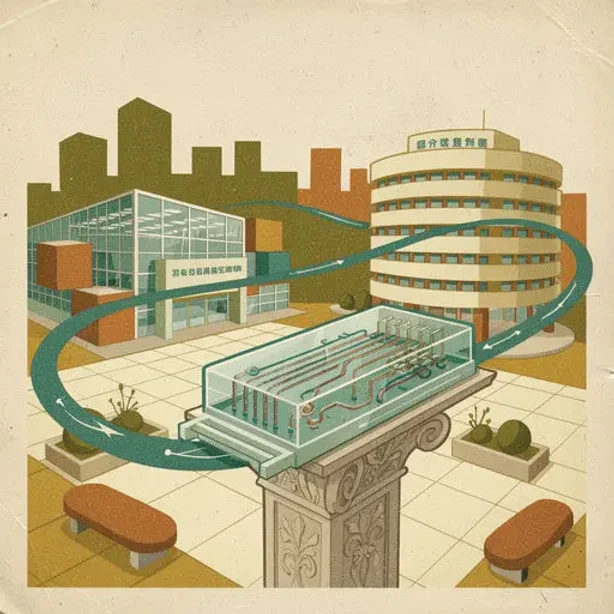
The City of Innovation in Milan was conceived as an urban laboratory designed to foster cross-fertilization between research, business, and daily life. Here labs, campuses, companies, and residential spaces intertwine with the aim of accelerating innovation projects in biotech, energy, and industry.
What is MIND and why it matters
MIND is the Milano Innovation District: an area of about one million square meters developed on part of the Expo 2015 site, with the goal of becoming a city of innovation in Milan. The aim is to create an environment where public research, large companies, startups, and urban services coexist to foster technology transfer and attract talent.
Spaces, population, and current phase
At full scale MIND is designed to host between 60 and 70 thousand people, but today daily footfall is around 10 thousand, largely linked to the Galeazzi University Hospital. The district includes Mind Village, the so-called “historic center,” designed to attract life and not just urban renderings.
Governance and the public-private model
The area’s ownership remains public (managed by Principia), while development is entrusted to Lendlease with a 99-year concession, creating a public-private partnership formalized in Federated Innovation. This model aims to balance public interests with market dynamics, preventing one actor from swallowing the other.
Research, Human Technopole and education
The eastern side is dedicated to research: Human Technopole, the new campus of the University of Milan, and the laboratories of the National Research Council (CNR) form the core of knowledge production in the district. Human Technopole hosts hundreds of researchers working in life sciences and health, with an approach that spans from molecules to populations to maximize the social impact of research (https://www.humantechnopole.it).
To turn discovery into value you need to connect research, administration, and industry already in the design phase of spaces and structures.
Business, testing and scaling
The western flank is dedicated to business: companies like ABB, E.On, Bayer, Esselunga, and Schindler are using MIND to test technologies, apply solutions, and scale products. In this area, research meets market and industrial processes and models of collaboration between corporate and startup are tested.
Cross-cutting technologies and practical cases
Technologies such as microfluidics are emerging as cross-cutting platforms used by startups and companies for applications spanning biotech to aerospace. This technological convergence creates opportunities for teams and investors interested in reusable solutions across multiple sectors.
Incubators, transition and Bio4Dreams’ role
Between research and market there is a critical phase where many ideas are too advanced to stay in universities and too immature for venture capital: incubators like Bio4Dreams operate here. Bio4Dreams helps biotech startups that are still immature toward marketable results, translating scientific insights into investor-friendly projects (https://www.bio4dreams.com).
Concrete examples emerging in the district include BiomimX, which develops organ-on-a-chip to test drugs, and BrainDTech, which works on extracellular vesicles to diagnose neurological diseases. These entities show how technical incubation combined with clinical and regulatory validation pathways is essential to turning prototypes into sellable products.
An effective incubator translates lab results into fundable milestones and defines clear metrics to attract investments.
Unobvious services: training, restoration and security
MIND is not only biotech and high-tech: it also hosts training centers for restoration and companies working on electromagnetic spectrum control and drones, underscoring the district’s multifunctionality. These activities show that an innovation district gains resilience by including diverse sectors and cross-disciplinary skills.
Critical discussion: opportunities, limits and choices for founders
While MIND offers an urban laboratory with high-profile infrastructure, its ability to generate systemic impacts will depend on how bottlenecks between research and market, space governance and attractiveness for talent and capital are addressed. To realistically assess the district’s potential, it helps to consider multiple viewpoints. On the positive side, the concentration of resources—university hospital, Human Technopole, university campus, and large companies—creates an ecosystem rich in data, expertise and real-world testing opportunities: for a biotech startup this means access to laboratories, potential clinical partnerships and faster validation pathways. However, there are concrete limits to consider: the current population is still below regime targets, and the overlap of public and private interests requires clear rules to prevent the business agenda from overriding public research. In terms of funding, early-stage phases remain critical: without dedicated tools to reduce technological risk and support regulatory routes, many companies may not reach the maturity needed to attract venture capital. Moreover, reliance on events and visibility (like the Innovation Weeks) does not substitute long-term strategies for attracting talent and creating stable jobs. For founders, the decision to establish at MIND should therefore be based on pragmatic assessment: technological compatibility, access to specific infrastructures, opportunities for pilot collaborations with companies or hospitals, and the presence of incubators or services that support regulatory and commercial pathways. These are concrete choices: participating in local incubation programs, building clinical partnerships for pilot studies and defining a milestone roadmap that makes the project investable. This dual approach—strategic evaluation by the founder and active policies by the managers—is what will determine MIND’s real success as a city of innovation.
How a founder can move now
For an entrepreneur interested in MIND, the immediate practical steps are: map the relevant players, contact incubators like Bio4Dreams, verify access to laboratories, and propose pilot projects with hospitals or resident companies. Building relationships in the early months matters more than any rendering: informal interactions in common spaces can become strategic partnerships.
A time window to monitor
The completion and full operation of the district are expected by 2032, but global events or crises can alter plans: adaptive strategies and medium-to-long-term horizons are necessary. In the meantime, initiatives like the MIND Innovation Week offer useful moments for networking and visibility but do not replace strategic planning for those seeking sustainable scale-ups.
In summary, MIND represents a concrete opportunity for those working in biotech, smart city, and cross-cutting technologies, but its true value will depend on the quality of connections between research, market, and space governance. Assessing immediate benefits and structural obstacles helps turn interest into a concrete action plan.
Related articles
-

Technological scalability in practice: Oshen, Eyedentity and Redfaire
Technological scalability is the lens through which to read three concrete cases that tell how a prototype becomes an operational and commercial infrastructure.
-

Designing metrics that preserve resilience and long-term value
Metrics decide what gets built and funded: how to design measures that reward resilience and long-term value, and validate them independently before scaling.
-

Governance and Localized Compute Infrastructure in Italian Startups
Compute infrastructure localized in energetically favorable areas offers operational stability.
-

AI-driven innovation across health, security, and agriculture
AI-driven innovation converges across health, security and agriculture: what the data and the venture money say, and where founders can still find room.