
Magazine Sustainability & Green Tech
Decarbonization of Europe’s Heavy Industry: Spark Cleantech Closes €30 Million Series A
Spark Cleantech backs Europe’s heavy industry decarbonization with a €30 million Series A to accelerate clean, innovative solutions.
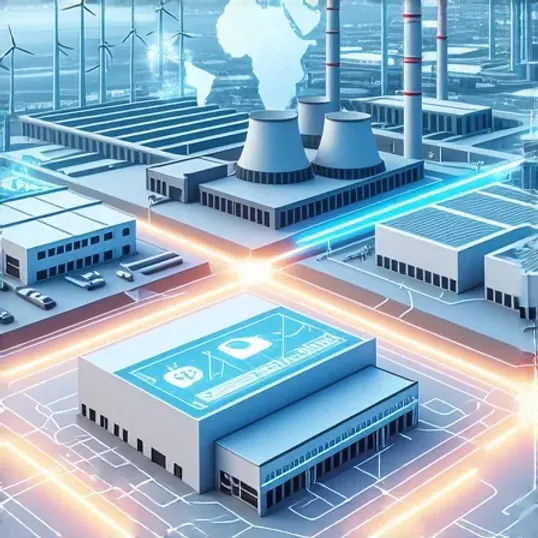
In recent years, climate innovation has accelerated the shift toward less-polluting industries. Spark Cleantech, a French startup born from the CentraleSupélec lab, announced a €30 million Series A to fund the decarbonization of Europe’s heavy industry. The proposed technology promises a radical transformation: reducing emissions and creating decarbonized materials directly within the production process.
The funding round was led by 360 Capital and Taranis, with support from regional funds and longtime investors. The round aims to scale a patented pulsed plasmolysis-based solution capable of replacing gas combustion with a supply chain that generates hydrogen and solid carbons, opening new pathways for industries such as glass, metallurgy, and polymers.
The technology presents a true technical revolution: the modules installed between the client’s gas network and the burners allow carbon to be extracted in the form of solid nanomaterials and hydrogen to be produced as an energy source, with emissions drastically reduced compared to traditional methods. Spark Cleantech asserts that this approach lets decarbonize industrial processes directly without radically altering existing infrastructure.
“Following our Seed round in the summer of 2023, we managed to deploy a first industrial pilot in under a year. We validated clear market traction and assembled a world-class international team. This funding will allow us to accelerate the scalability that operators seek and to design more sophisticated financing tools for structured businesses,” said Patrick Peters, co-founder of Spark Cleantech.
With about an 85% reduction in emissions for the decarbonization phase, Spark Cleantech’s technology aims to generate two decarbonized materials (solid carbon and hydrogen) without combustion, offering new application avenues for energy-intensive sectors such as metallurgy, glass production, polymers, and batteries.
The technology at the center of the transition
Spark Cleantech’s solution is based on pulsed plasmolysis: a process that removes carbon from the incoming gas prior to combustion, leaving only hydrogen as an energy source. The extracted carbon is transformed into a solid nanomaterial, useful in numerous industrial sectors. According to the company, this approach avoids the need to reconfigure large energy infrastructures and significantly reduces costs associated with fossil fuel management.
The shift toward a hydrogen- and decarbonized-carbon-based energy supply chain translates into economic advantages: greater operational flexibility, more linear cash flow, and a higher likelihood of access to financing aimed at decarbonization projects. Spark Cleantech notes that decarbonization is not only an environmental issue but a lever to improve efficiency and competitiveness of traditionally capital-heavy industries.
The startup was founded in 2022 by Erwan Pannier and Patrick Peters. Since then it has raised €34 million and is aiming for a first commercial-scale deployment by 2027, with the goal of qualifying the first production lines and expanding application opportunities in various industries, including polymer suppliers and battery materials providers.
A dynamic European landscape
The Spark Cleantech round fits into a European context where investors and entrepreneurs are seeking decarbonization solutions for complex industries. The ecosystem has already seen other significant operations: GravitHy, for example, raised around €60 million to finance low-carbon iron production, while Tulum Energy secured €22.9 million to develop clean hydrogen production solutions via innovative technologies. Also PeroCycle, a UK-based company, attracted capital for a carbon recycling technology aimed at reducing emissions in the steel sector.
These interventions show a clear trend: European investors are betting on DeepTech and industrial solutions capable of converging sustainability and operational economics, creating markets able to absorb venture capital in sectors essential to the continental economy.
Regarding Spark Cleantech, the rollout strategy envisions modular installation of units directly at customer sites, enabling rapid expansion and the adoption of a scalable business model that combines cutting-edge technology with large-scale project management. The goal is to provide an out-of-the-box solution for energy-intensive industries and foster a concrete transition toward a hydrogen- and decarbonized-materials-based energy chain.
Debate: pros and cons of industrial decarbonization
The path laid out by Spark Cleantech offers obvious advantages but is not without challenges. On one hand, pulsed plasmolysis promises drastically lower emissions, increased efficiency, and greater integration with modern energy networks. Widespread adoption could reduce dependence on fossil fuels in key sectors such as glass, metallurgy, and polymers, opening opportunities for companies, technology providers, and investors. Moreover, the creation of a market for nanostructured carbon-derived materials could open new application avenues in complex value chains, including high-demand sectors like lithium-ion batteries and high-performance polymers.
On the other hand, questions remain about scalability, implementation costs, and integration with existing industrial infrastructures. The technology requires upfront investments and strong collaboration among suppliers, plants, and utilities; managing such large-scale projects demands advanced technical skills and rigorous risk management. Additionally, energy regulation and innovation-support policies play a crucial role in determining which solutions will prevail across European countries. Some observers may wonder whether energy savings translate into sufficient profitability to justify large-scale adoption, especially in sectors with long investment cycles and tight quality requirements.
Ultimately, the effectiveness of decarbonizing heavy industry will depend on integrating new technologies with a long-term energy strategy, access to capital for scaling, and the ability to concretely manage operational, social, and environmental risks. Spark Cleantech positions itself as a key player in this scenario, but its ability to turn promise into reality will depend on its capacity to collaborate with industrial partners, investors, and regulators to create a supportive environment for sustainable innovation.
Outlook and future impacts
Looking ahead, the key to success lies in translating a technologically advanced process into a reliable, economically competitive industrial solution. The ability to drastically reduce emissions without requiring major infrastructure overhauls represents a potential competitive advantage for companies seeking innovative funding models and a sustainable growth trajectory. Moreover, the emergence of a Europe-wide ecosystem oriented toward decarbonizing heavy industry could spur further investments in DeepTech, foster collaboration among universities, research centers, and businesses, and accelerate the clean-technology adoption at a continental scale.
In conclusion, Spark Cleantech’s decision to pursue a significant Series A to boost the decarbonization of Europe’s heavy industry reflects a broader investment trend: technological innovation, when paired with a sustainable business model and strong public-private collaboration, can transform traditional industries and drive low-carbon economic growth.
Conclusion: inspired by the union of innovation and pragmatism
The road to real decarbonization of heavy industry is not easy or immediate, but the European ecosystem shows tangible signs of progress. Spark Cleantech, with its pulsed plasmolysis-based technology, represents an important piece of this transformation. If it can achieve the expected scalability and consolidate industrial and financial partnerships, it could help redefine the rules of the game for a cleaner, more competitive industry on a global scale.
Related articles
-

Sustainability and Community as a Product: Strategies for Impact
Campaigns that link product and social value shift attention from ownership to collective action.
-

Kylian Mbappé joins On and the rise of verified carbon accounting
At the same time the market for carbon accounting software is exploding because regulators demand verifiable numbers.
-
Energy automation: smart homes, silicon anodes and installers
Energy automation is the thread that connects thermostats that learn routines, denser battery materials and new business models.
-

Energy transition: small modular reactors vs local biogas solutions
La energy transition is often framed as a crossroads between large long-term infrastructure and distributed solutions that deliver value today.