
Magazine Biotech & Digital Health
Gene editing for tropical crops: Tropic closes €91.3M and brings gene-edited bananas to market
Tropic closes a €91.3M round to bring gene-edited bananas and rice to market, accelerate production, and strengthen supply chains.
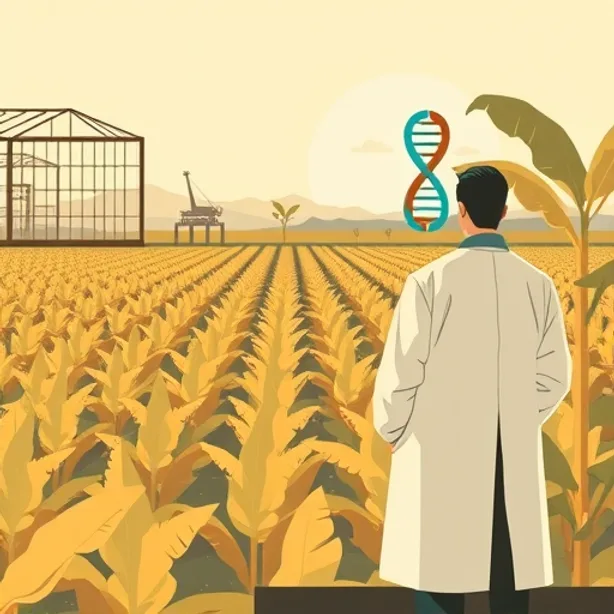
The €91.3 million round positions Tropic to scale production and the supply chain to bring to market bananas and rice developed through gene editing for tropical crops. The Norwich-based British startup announced the closing of a heavily oversubscribed Series C to accelerate the commercial diffusion of its varieties and expand its climate-resilient portfolio.
Why gene editing for tropical crops is relevant today
The funding aims to transform lab results into commercial products that reduce post-harvest losses and boost disease resilience. In 2025 Tropic launched the first new commercial banana varieties in more than 75 years, drawing global attention for tangible solutions such as a non-browning banana and a variety with 12 more days of green life.
The ability to extend the product’s shelf life opens new export routes and can reduce transport waste by up to 50%.
Round details and governance
The €91.3M Series C was co-led by Forbion (Bioeconomy Fund) and Corteva (Corteva Catalyst), with significant participation from Just Climate and IQ Capital. Other supporters include ABN AMRO, Invest International, and existing investors such as Temasek, Five Seasons Ventures, Sucden Ventures, Genoa Ventures, and Polaris Partners.
Board appointments
Joy Faucher (Forbion), Tom Greene (Corteva), and Siddarth Shrikanth (Just Climate) will join Tropic’s board to guide the commercial scaling phase. Additionally, Gustavo Bassetti, Rob Scott, Onno van de Stolpe, and Alex Wilson will serve as board observers, strengthening commercial and biotechnological expertise.
The technology: what GEiGS® is and how it works
The GEiGS® platform combines elements of gene editing and RNA interference to divert the plant’s natural gene-silencing machinery toward specific targets without introducing externally coding transgenes. In practice, Tropic makes small edits to non-coding regions of the genome (using tools such as CRISPR or TALENs) to direct the silencing system toward endogenous genes or pathogen targets.
Practical applications
The approach enables the development of plants with resistance to diseases such as Panama Disease (TR4) and fungal pathogens like Black Sigatoka, reducing dependence on chemical inputs. Tropic states that the technology enables heritable but non-transgenic solutions, a feature that can simplify regulatory pathways in certain markets.
GEiGS does not modify coding proteins; it redirects natural RNAi mechanisms to achieve targeted silencing while maintaining the product’s non-transgenic nature.
Products on the market and operational impact
In 2025 Tropic launched two banana varieties: a non-browning one recognized among TIME’s Best Inventions and one with 12 extra days of green life, delivering tangible impacts on field yield and export. Extending green life broadens the logistics window, enabling new export routes and reducing waste and costs tied to spoilage and returns.
Commercial and production roadmap
With the new funds, Tropic will finance large-scale production expansion, strengthen global supply chains, and form commercial partnerships in key export markets. The company has also shipped plants to establish a mother plantation for the TR4 resistance program, with commercial deployment planned to begin in 2027.
Gene editing for tropical crops: opportunities for startups and investors
The Tropic case shows that meaningful investments in agtech/biotech can translate into commercial products within a few years, when paired with supply-chain strategies and industrial partnerships. For founders and investors, the key lever is integrating research, plant production, and global commercial channels, along with navigating regulatory and public acceptance issues.
Critical analysis: risks, regulation, and social acceptance
Large-scale adoption of gene editing for tropical crops brings significant opportunities but also practical, regulatory, and market challenges that require multidisciplinary strategies. The first critical dimension concerns regulation: even though GEiGS promises non-transgenic solutions, regulations on modified organisms vary widely by country and can influence access to export markets. Second, scalable production requires investments not only in nurseries and propagation facilities but also in phytosanitary quality control, genetic traceability, and intellectual property management. A third aspect is consumer and supply-chain stakeholder acceptance: even if a non-browning banana or one with extended shelf life offers economic and environmental advantages, public storytelling and sustainability certifications will play a crucial role. Finally, dependence on the global supply chain exposes one to geopolitical and logistical risks that require diversifying partners and contingency plans. Considering these elements, effective strategies for an agtech startup include adopting co-development approaches with exporters and distributors, investing in local field trials to demonstrate agronomic and environmental benefits, and transparent communications plans toward customers and regulators. Researchers and entrepreneurs should also evaluate business models based on licensing varieties, seed production services, and industrial partnerships to reduce upstream capital. In short, the potential is real but requires integrated approaches that combine biotechnology, operations, and stakeholder engagement to translate innovation into real impact.
Next steps and what to watch
Over the next two years, it will be crucial to monitor expansion of production capacity, initial sales in export markets, and outcomes of the TR4 resistance programs. Key metrics to track include volumes produced, adoption by exporters, trial results on resistance, and regulatory moves in major destination markets.
Implications for founders and innovators
For those working in agricultural deeptech startups, the Tropic case underscores the importance of combining patents, agronomic proof-of-concept, and industrial partnerships to scale. Early investments in the supply chain, quality, and communications can shorten time-to-market and boost adoption.
Resources and contacts
Consider collaborations with local research institutes, distributors, and investors specializing in the bioeconomy to accelerate entry into international markets. This approach helps field validation and mitigates logistical and regulatory risks.
How to turn innovation into impact
The combination of pragmatic biotech solutions, dedicated capital, and commercial partnerships is the path to moving from the lab to varieties that improve yields, sustainability, and market access. Tropic provides an operating model to watch for those aiming to build globally scalable agtech businesses.
Final note
The capital raised and the initial commercial products make Tropic one of the most interesting cases of applying gene editing to tropical crops in recent years. Following its evolution provides concrete insights on how to translate scientific innovation into scalable commercial solutions.
Related articles
-

AI governance for space biotech: risks, funding and operational steps
For a space biotech these practices must integrate biosafety. Artificial intelligence enters today into laboratories and orbits and asks to be governed.
-

The New Paradigm of Investment Standards in Life Sciences
Alchemab raised a record €29.3 million of public money for its AI antibody platform, resetting what European investors expect from deep tech biotech deals.
-

Wearable Robotics closes €5M Series A and accelerates expansion
Wearable robotics for rehabilitation: Wearable Robotics raises €5M to expand products, markets and regulatory compliance globally.
-

Cellular Expansion Platform: Scinus Raises €3 Million for Osilaris
Scinus secures €3M for the Osilaris cellular expansion platform, aiming at commercial rollout and production of cell therapies.