
Magazine Sustainability & Green Tech
Geothermal Energy with Electric Impulse Drilling: Telura Emerges from Stealth with €4M to Unlock Baseload Power
Telura accelerates geothermal energy with electric impulse drilling: €4M pre-Seed, SPRIND validation, and 2026 baseload launch.
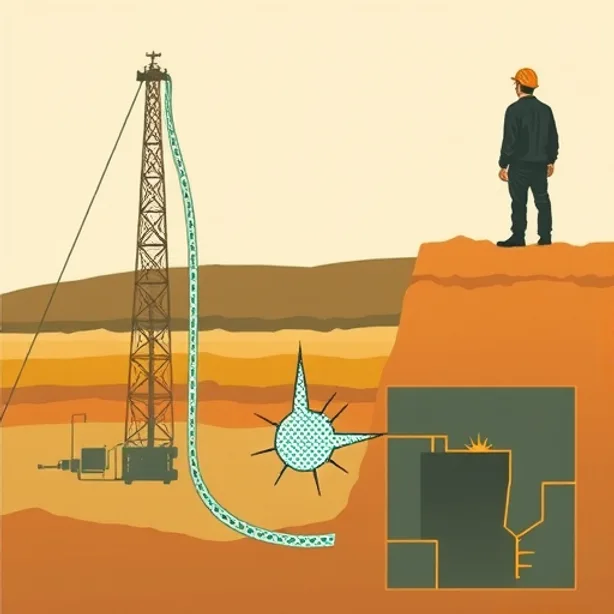
Geothermal energy with electric impulse drilling promises to make geothermal energy a consistently available and competitive source for European industry. If proven in the field, this technology can reduce drilling times and costs, enabling access to deep resources that are currently prohibitive. Telura, a Munich-based deeptech, exits stealth with a pre-Seed round and a validation agreement aiming for market entry as early as 2026. For founders and innovators, it’s a emblematic case of how the convergence of academic research, patient capital, and product engineering can move a frontier in energy.
Ranking of the Most Useful Articles for Innovators
Evaluating impact, originality, hard data, and potential influence on decisions, this is the order from most to least useful: it rewards those tackling deep innovations with systemic implications and penalizes more incremental or promotional approaches.
- Germany’s Telura exits stealth with €4 million pre-Seed to unlock geothermal energy with electric impulse drilling — for technological depth, energy relevance, and a concrete roadmap.
- Italy’s AI robotics startup Mirai Robotics raises €3.6 million — important for maritime autonomy and dual-use, but with fewer technical details and operational metrics.
- Vilnius-based Saltz raises €20 million Series A — interesting for B2B food infrastructure, but less original and with a more limited systemic impact.
Why Geothermal Energy with Electric Impulse Drilling Matters Now
According to Telura, Europe risks exhausting its electricity margins by 2029, while demand grows with AI and electrification, reinforcing the urgency of energy resilience. The electrical grid needs baseload capacity ready 24/7 to integrate intermittent renewables and reduce dependence on imports exposed to geopolitical shocks. In this scenario, geothermal energy represents a programmable, nearly zero-emission source, but it remains held back by the costs and risks of deep drilling.
What Geothermal Energy with Electric Impulse Drilling Is
Telura is developing a technology called electric impulse drilling: high-voltage impulses fracture rock from within rather than milling it with a mechanical tricone bit. The promise is to reduce tool wear, accelerate advance, and unlock hard formations like granites at depths (5–20 km) and high temperatures. The company talks about “destroying rock with lightning,” a metaphor that summarizes the physical principle behind the process.
High-voltage electrical impulses generate fractures in the rock volume, limiting mechanical wear on the bit. The objective: greater speed and fewer trips for tool replacements.
The team notes that the technology builds on more than two decades of research at leading German technical universities, with effectiveness already demonstrated in granite fracturing. The challenge is no longer proving the phenomenon, but industrializing it into reliable and economically sustainable systems.
Investments and Milestones for Electric Impulse Geothermal
In the €4 million pre-Seed round, Nucleus Capital, Possible Ventures, and First Momentum invested; a validation agreement with SPRIND, the German breakthrough-innovation agency, has also been signed. The plan foresees first market applications in 2026, with integration compatible with existing drilling systems.
“Their strategy of drilling without mechanical wear could unlock base-load green energy virtually anywhere, turning geothermal energy into a scalable solution,” says Maximilian Ochs (First Momentum).
How It Works and Why It Could Scale
Drilling can account for up to 70% of geothermal project costs: every reduction in wear, downtime, and penetration rates translates into more predictable CAPEX. Integrating with drilling systems already in use lowers adoption barriers and qualification cycles, accelerating field testing and industrial scale-up. If performance holds in deep wells, operational windows that were previously uneconomical could emerge.
The co-founder and CTO Andrew Welling argues that electric impulse drilling is a technology that is “already proven” scientifically, and the bottleneck is engineering: reliability, repeatability, and cost per meter under real-world conditions. Translating lab results into a system that works weeks underground, in aggressive fluids and at high temperatures, is the true threshold of industrialization.
Market Implications and Use Cases
For utilities, large energy users, and regions with mature infrastructure, the availability of deep heat could enable stable electricity and process heat. A faster and cheaper geothermal could fill grid gaps and stabilize the renewable mix during sunless and windless hours. At the same time, reduced drilling risk could attract project capital that has been cautious about deep geothermal.
Technical Risks and Operational Constraints
Long-term reliability of the impulse system in HPHT environments (high pressure/temperature), compatibility with different lithologies, and the complexity of site operations remain to be verified. The sticking point will be cost per meter and predictability of timelines across geological contexts, not just instantaneous speed.
What to Watch for Until 2026
Over the next 18–24 months, key signals will include: SPRIND validation results, tests at significant depths, metrics for rate of penetration, wear, and down-times, as well as estimated LCOE/LCOH on pilot projects. The ability to integrate the technology into real-world sites with existing teams and equipment will be the true adoption accelerator.
- Industrial partnerships for drilling services
- Local permitting processes and seismic risk management
- Pilot-well pipelines at geologically challenging sites
Debate: Promises, Limits, and Alternatives
The potential of deep geothermal is enormous: Telura notes that 1% of superheated rocks could cover global demand eightfold. Yet industrial scalability depends on factors beyond the technological breakthrough: well safety, reliability of power components, fracture control, mitigation of induced risks, and social acceptance. The claim that “renewables, intermittents, and fossils alone are not enough” is grounded in the needs for grid balancing and flexibility, but it opens a discussion with other low-emission baseload options (hydropower, next-generation nuclear, long-duration storage). On the cost side, the equation includes well success rates, learning curves, HV component supply chains, and standardization to reduce engineering-to-order. Policy can make a difference: credit guarantees, dedicated auctions, and streamlined processes could help bridge the valley of death between laboratory TRLs and commercialization. Environmentally, robust monitoring of induced seismicity and casing integrity is needed, along with completion practices that minimize local risks; the literature on geothermal energy offers pros and cons to be contextualized site by site. In short, Telura’s proposal aligns with European priorities for safety and decarbonization, but will be credible only with long-run field performance data, transparency on data, and a clear, replicable regulatory pathway. The balance between engineering boldness and risk governance will determine whether electricity from deep heat becomes a stable part of the mix within the decade.
Where to Learn More and Sources
Beyond corporate updates, it is useful to follow SPRIND’s materials for validation and German academic publications on electric impulse drilling; for broader context, refer to encyclopedia entries such as geothermal energy. Linking test data with comparable economic metrics (cost per meter, LCOE/LCOH) is essential for informed investment decisions.
From Laboratory to Baseload: How Geothermal with Electric Impulse Drilling Could Shape Strategic Choices
For founders, utilities, and policymakers, the Telura case shows how drilling technology can unlock entire value chains when integrated with industry players and field-tested. Geothermal energy with electric impulse drilling should be tracked by measuring both technical and commercial traction, because it could become a cornerstone of European baseload within a few years.
Related articles
-
Energy automation: smart homes, silicon anodes and installers
Energy automation is the thread that connects thermostats that learn routines, denser battery materials and new business models.
-

Energy transition: small modular reactors vs local biogas solutions
La energy transition is often framed as a crossroads between large long-term infrastructure and distributed solutions that deliver value today.
-

Technological innovation in startups: Naked Energy and Relu insights
Naked Energy and Relu exemplify how technological innovation, supported by targeted investment, can produce measurable outcomes.
-
How a million wetland project drives sustainable innovation
Wetland innovation: L'innovazione sostenibile non è più un concetto marginale. È la forza trainante che ridefinisce le traiettorie globali di sviluppo.