
Magazine Mobility & Smart Cities
Integration of European Autonomous Transport: Benteler Acquires ioki for an Integrated Mobility Platform
Analysis of Benteler's acquisition of ioki and the integration of European autonomous transport into urban infrastructure.
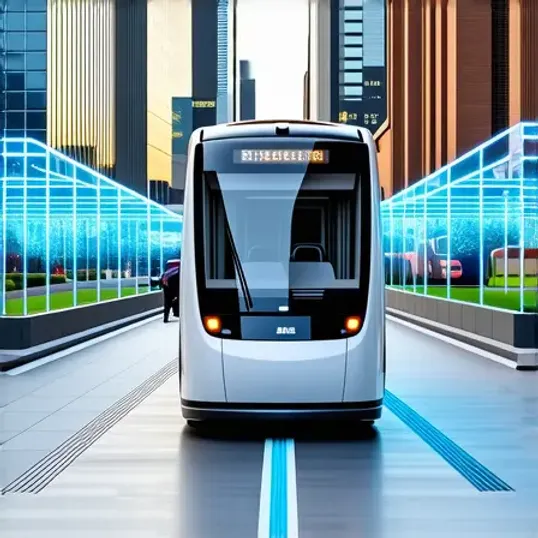
Innovation in mobility is growing more complex, with a rising focus on integrating software solutions, autonomous vehicles, and public transport services. In this context, Benteler Group announces the acquisition of ioki, Deutsche Bahn’s mobility software, opening a crucial chapter in the integration of European autonomous transport. The deal is expected to close soon and marks a benchmark for how traditional supply-chain players are transforming their offerings to become providers of integrated mobility services.
The ioki Acquisition: What Changes
According to the announcement, Benteler Group is acquiring ioki with the aim of building the first full-service European platform for autonomous mobility. Within the agreement, HOLON, Benteler’s subsidiary, will serve as the OEM for autonomous movers and will be complemented by ioki, which will provide the platform and routing technology for on-demand services and integration with public transport. Benteler Mobility, in turn, will manage operational services and fleet financing for autonomous vehicle deployments. The integration of these components stems from the desire to offer end-to-end solutions, reducing adoption barriers and accelerating the deployment of intelligent mobility systems.
HOLON is a manufacturer of autonomous movers and is part of a partnership with TASARU, a Saudi-based investor. Benteler Mobility’s offering includes not only the supply of vehicles but also the operational and financial aspects, a combination that reduces risks for municipalities and operators interested in implementing autonomous mobility services on a large scale. The synergy between an advanced software platform, autonomous vehicles, and fleet management could accelerate the adoption of integrated mobility solutions across several European cities.
The Role of HOLON and Benteler Mobility
HOLON, an OEM for autonomous vehicles, will be at the center of the operational chain, providing the vehicles and services needed to execute autonomous mobility missions. Benteler Mobility’s commitment centers on a mobility services platform as a SaaS-on-top, with the added provision of rental and fleet-management services. Together, these activities aim to create an ecosystem where routing services, demand management, and operations are integrated into a single solution, facilitating the introduction of autonomous buses or shuttles in urban and peri-urban areas.
ioki, meanwhile, will bring its platform and routing technology for on-demand services and integration with public transport. The goal is to create seamless transport experiences for users, where private and public solutions move cohesively, offering optimized routes, reduced wait times, and better coverage of easily reachable areas. According to involved representatives, the operation not only integrates vehicles and software but also trains public transport networks to interface with private mobility services, creating new demand-management opportunities and lowering total costs.
Ralf Göttel, CEO of Benteler Group, commented that this integrated approach is unique in the sector and that it greatly simplifies the deployment and operation of autonomous vehicles for customers. The company, already active in traditional metalworking sectors, is thus evolving into a provider of autonomous mobility capable of offering end-to-end solutions. Michael Barrière-Scholz, co-founder and CEO of ioki, added that being part of the Benteler Group strengthens and expands the international leadership of software and analytics solutions.
Impact on the European Mobility Ecosystem
The combination of advanced routing software, autonomous vehicles, and operational capabilities could significantly change how cities plan and manage mobility. ioki has already distinguished itself in on-demand solutions, and looking ahead, the unified platform could facilitate integration with existing public networks, improving coverage and accessibility. Benteler Group brings resources, access to an industrial network, and financing capacity that can make large-scale adoption of these services more sustainable and cost-effective. If the transaction closes as planned, piloting in European urban contexts could accelerate and provide concrete case studies for other cities interested in similar integrated mobility models.
This evolution comes at a time when Europe is promoting investments in smart infrastructure, data, and interoperability between public operators and private actors, with a push toward mobility solutions that reduce congestion, pollution, and operating costs. The prospect of a single platform capable of coordinating autonomous vehicles, ride-hailing, and demand management seems to address concrete needs for optimizing transport networks and improving user experience, especially in complex urban settings.
Discussion on Opportunities and Risks
On one hand, the Benteler-ioki alliance promises a democratization of autonomous mobility technology: a common platform connecting autonomous vehicles, intelligent routing, and integration with public transport could lower the barriers to implementation for municipalities and operators. This approach offers a fresh perspective on how urban mobility can be envisioned not as isolated services, but as a cohesive system that manages demand, supply, and infrastructure in real time. The adoption of autonomous shuttles, with integrated fleet management and financing, could reduce costs and financial risks for administrations, accelerating pilot projects and demonstrating the scalability of advanced business models in the public-private sector.
However, the road is full of challenges. First, accelerating regulatory hesitations on the use of autonomous vehicles and interoperability of public transport networks with private solutions remains essential. Existing infrastructure must be upgraded to enable safe and reliable on-demand services based on autonomous technology. Secondly, data management and cybersecurity represent a critical frontier: a platform that connects vehicles, routing, and public systems must guarantee protection against cyber threats and passenger data protection. Finally, potential dependence on a single supplier for software, hardware, and financing services could expose administrations to vendor lock-in risks and a single chain of responsibility in case of operational issues or incidents.
On the other hand, the horizon of integrating European autonomous transport encourages innovation: a robust platform can provide data analytics tools, route optimization, and service customization that were previously hard to achieve at scale. In urban contexts, adopting autonomous vehicles can help reduce travel times, improve accessibility to underserved areas, and offer more flexible solutions than traditional transport systems. Furthermore, the presence of an established player like Benteler in this dynamic could attract investments and talent, spurring further developments in the sector and accelerating the adoption of common standards that facilitate interoperability among different cities and companies. Essentially, it is about balancing the opportunity for more efficient and integrated mobility with the need for robust governance, security, and transparency, so that value can be realized sustainably over time.
Conclusion: A Path Toward Truly Integrated Mobility
The acquisition of ioki by Benteler marks a significant milestone on the road to European autonomous transport integration. If this path is pursued with care, proper regulation, and collaborative governance, it could open new opportunities for cities, operators, and suppliers, creating mobility models that are not only technologically advanced but also economically and socially sustainable. In an initial phase, the focus should be on pilot projects that demonstrate the effectiveness of a single platform in real-world environments, with clear impact measures: reduced waiting times, improved accessibility, and optimized energy use. For founders and innovators, this is about observing how the convergence of software, hardware, and operating finance can become a lever to accelerate the adoption of advanced mobility solutions, provided that regulatory, security, and interoperability challenges are managed in a transparent and proactive manner.
Related articles
-

Sustainable mobility for integrated urban health and hospitality
Sustainable mobility links electric fleets, clinics and hospitality: operators such as Green SM, Angel Health, Le Méridien Phuket Mai Khao and ONYX Hospitality Group build connected services.
-

Urban Innovation: Integrating Architecture, Health Tech and Finance
From architecture to health tech and finance, urban innovation offers concrete opportunities to founders, investors and operators.
-

Digitalization voucher and funding mix for scaling mobility startups
The digitalization voucher can be combined with the mini development contracts for the automotive sector, Women TechEU 2 and Planet Foundamentals.
-

Urban transition roadmap using HERIFORGE, FORTIS, DUT, NetZeroCities
Urban transition is the operational space where funding opportunities, intellectual property protection and technologies like XR and robotics intersect.