
Magazine Artificial Intelligence
Nvidia board probes CEO Jensen Huang over espionage-linked affair
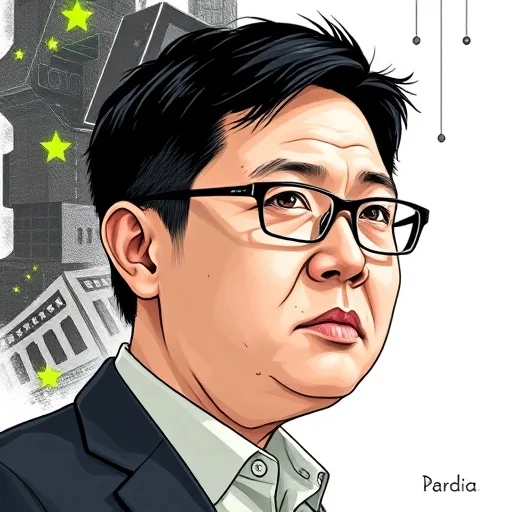
Nvidia’s board of directors announced an independent investigation into founder and CEO Jensen Huang on November 8, 2026. The CEO had publicly admitted that he had been unfaithful to his wife. The affair intertwines personal relationships, suspicions of industrial espionage and American national security, and strikes the semiconductor giant that dominates the artificial intelligence market. At the center is Huang’s relationship with Alice Huang, a former executive at Megaspeed. The technology company is based in Singapore. US authorities suspect that it gathered information on behalf of Chinese intelligence. The two are not related.
The inquiry has been entrusted to a committee of independent directors, assisted by external legal advisors, and must determine whether confidential information was compromised. Nvidia specified that it has no evidence indicating national security violations or disclosures of corporate secrets. Huang continues to lead the group in the meantime, and the board has confirmed its confidence in the current leadership.
Espionage accusations and the monitored contacts with CEO Jensen Huang
According to the New York Times, American intelligence officials believe that Alice Huang was recruited by China’s Ministry of State Security. The authorities had reportedly monitored her contacts with Nvidia’s CEO. They feared the relationship could give Beijing access to information on the company’s industrial and commercial strategies. The accusations have so far produced no indictments, and the Chinese embassy in Washington rejected them, calling them baseless.
Megaspeed’s position makes the case particularly delicate. The company had already come under scrutiny as a major Asian buyer of Nvidia GPUs. The suspicion concerned its facilitation of Chinese customers’ access to processors subject to US export restrictions. According to earlier journalistic reconstructions, it purchased around 2 billion dollars’ worth of chips. Nvidia disputed the allegations regarding irregular exports, arguing that previous checks had disproven them.
The New York Times first reported the relationship on October 29. It wrote that Secretary of State Marco Rubio had warned administration officials about the connection. President Donald Trump had previously been informed of the intelligence concerns, according to journalistic reconstructions. He told journalists that he had not “heard he’s done anything wrong.” Yahoo Finance reported his remarks.
Huang’s tenure at the helm remains in doubt
The most immediate problem concerns the leadership of the company founded in 1993. Jeffrey Sonnenfeld, a professor at the Yale School of Management and expert in corporate leadership, considers a professional survival for Jensen Huang possible. But he puts the odds at around 50%. According to Sonnenfeld, the executive’s behavior demonstrates a serious lack of judgment, regardless of any awareness of the activities attributed to Alice Huang.
The CEO could benefit from “idiosyncrasy credits,” a concept from social psychology that describes the margin of tolerance earned through past results and behavior. Three decades of industrial success could soften the consequences of the scandal. Investors, for now, appear to be counting on his staying on. Dan Ives of Yorkville Ives called the affair a “black eye” but expects Huang to remain in the short term. He does acknowledge a “clear” risk of possible removal.
An eventual departure would open a complex organizational scenario. Nvidia has developed a relatively flat management structure, in which the CEO maintains direct relationships with roughly 60 executives. The model favors centralized decisions but makes it less obvious who a successor might be. The founder’s children, both employed at the group, are also occasionally mentioned in succession speculation, without official indications. Sonnenfeld even floated an external solution, mentioning former Google CEO Eric Schmidt as a possible reference figure. It remains, however, a theoretical scenario. Huang does not hold shares with enhanced voting rights capable of guaranteeing him control over corporate decisions.
The artificial intelligence ecosystem under pressure
The potential consequences go beyond the company’s walls. Nvidia is one of the main suppliers of the computing infrastructure used to train and run advanced artificial intelligence models. Its market value weighs enormously on global markets. The group financially supports numerous businesses in the ecosystem through stakes and agreements involving OpenAI, Anthropic, xAI, CoreWeave and Nebius, and it has also developed financial initiatives with major institutional investors including BlackRock, Blackstone, Brookfield, Goldman Sachs and KKR to support large-scale infrastructure investments.
This network creates strong interdependence between technology suppliers, AI model developers and data center operators. A leadership crisis could affect investor expectations, the availability of capital and infrastructure planning. The risk does not amount to an imminent collapse, but it increases uncertainty in a sector already facing questions about the sustainability of its investments.
The chip sector has so far held up: Nvidia’s Asian partners rebounded in the morning after the announcement. TSMC manufactures Nvidia’s most advanced processors and gained about 4.7%. SK Hynix and Samsung supply the high-speed memory needed for those chips and also rose. Shares were recovering after the previous week’s decline, driven by fears over AI spending that had also hit Google stock.
Washington tightens the screws on the case
The case comes as American authorities step up their focus on transfers of advanced technology to China. Jensen Huang had repeatedly argued for keeping certain trade channels with Beijing open, a position contested by parts of the US technology industry. Three House committee chairs have requested a confidential meeting with the CEO for November 18. The day before, Nvidia will present its quarterly results, an event closely watched by investors.
The investigation must establish what information, if any, circulated, through which interlocutors, and whether corporate protocols worked. The affair raises a governance question. For companies developing strategic infrastructure, the personal relationships of top executives can generate vulnerabilities. These are difficult to detect with traditional cybersecurity controls. The outcome will determine Huang’s personal future and could affect security standards across the entire industry. For Nvidia, the challenge will be to demonstrate that its industrial and strategic reliability does not depend solely on the judgment of its founder.
Sources:
Related articles
-

Jensen Huang resigns as Nvidia CEO after 33 years, Kress steps in
Jensen Huang resigns from Nvidia on November 12 after 33 years: Colette Kress interim, shares down 10-14%, and over $3.2 billion of China projects at risk.
-

Fractile raises $720M Series C to challenge Nvidia in AI chips
London AI chip startup Fractile closes a €649 million Series C at a €6.3 billion ($7 billion) valuation to challenge Nvidia in inference.
-

Anthropic: internal Claude use at list price tops staff spend
In its IPO prospectus Anthropic says that in April 2026 internal use of Claude, valued at list prices, exceeded its monthly spend on staff, excluding shares.
-

Querio raises $5M to keep AI assistants consistent on data
Querio, a London startup founded in 2024, launches with €4.48 million in Seed funding led by BMW i Ventures to unify AI answers on business data.