
Magazine Policy & EU Innovation
STEP Platform for European Technologies: Practical Guide and Funding Opportunities
Discover the STEP Platform for European Technologies: goals, calls, and timelines for innovative projects in Tuscany and beyond.
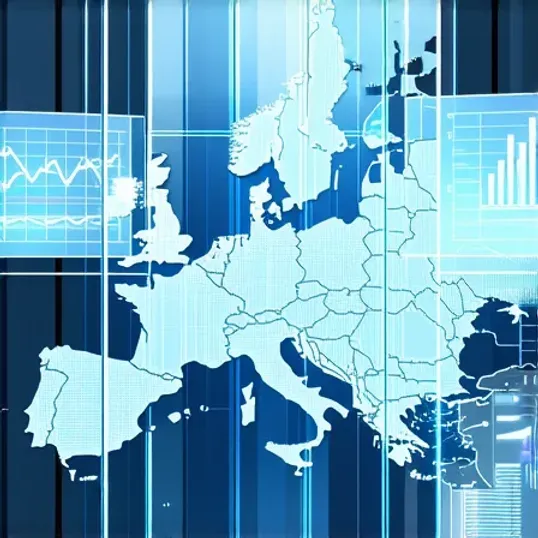
The STEP Platform for European Technologies is a strategic framework aimed at accelerating industrial innovation through public-private investments in critical technologies. In Tuscany, the Region approved a dedicated call for Strategic STEP Innovation, approved by Directorate Decree No. 26582 of December 10, 2025, with the aim of strengthening the competitiveness of the regional production system and enhancing technological autonomy in key sectors. The STEP initiative, provided for by Regulation (EU) 795/2024, focuses on development and production projects in three strategic areas: digital and deep-tech technologies, clean and efficient technologies, and biotechnology, directing a portion of structural funds investments toward these sectors.
What the STEP Platform for European Technologies is and why it matters for innovation
The STEP Platform for European Technologies was created to connect innovative projects with funding tools targeted at sectors deemed strategic at the EU level. In Tuscany, the initiative is supported by the Regional ESIF Program 2021-2027, with resources allocated to actions 1.6.1 “Support for innovation projects in the STEP technologies area” and 1.6.4 “Support for business investments in STEP technologies.” The initiative provides grants, equity contributions, and vouchers to boost development, production, or manufacturing of critical technologies and strengthen supply chains.
Eligible operators include SMEs in standalone or aggregated form (including professionals) and, according to the conditions set out in Articles 142 and 293 of Regulation (EU) No. 651/2014, large enterprises as well. Relevant NACE codes must correspond to an updated classification (NACE 2025 and onwards). The game is played on projects that meet eligibility criteria established by Regional Council Resolution 704/2025, published to align economic activity with the correspondence tables.
Where and how to participate in the STEP Platform for European Technologies
Applications for support, drafted in Italian, must be submitted exclusively online via the new Sistema Fondi Toscana (SFT) information system. Applications concern STEP strategic innovation projects and can be submitted starting at 10:00 AM on February 16, 2026, and until resources are exhausted. The deadline is not a fixed date but depends on funding availability, so it is crucial to prepare a solid application within the indicated timeframe.
Participation requires a careful assessment of the relevant Ateco classification, compliance with the regional council’s guidelines, and adherence to access requirements set by the EU regulation and the regional call. In addition to formal requirements, it is essential to present a project with tangible technological impact, market potential, and economic sustainability, accompanied by development, production, and integration plans with existing value chains.
Areas of intervention, criteria, and stakeholders
Interventions aim to support projects in three key sectors: digital and deep-tech technologies, clean and efficient technologies, and biotechnology. The grants are disbursed as non-repayable subsidies and capital contributions, with the possibility of vouchers. Potential beneficiaries include SMEs and large enterprises, provided they operate in eligible sectors and comply with the indicated Ateco codes. The amount of available resources is defined by the ESIF Plan 2021-2027 and regional allocations, and the conditions are governed by Regional Council Resolution 704/2025 and related updates.
A key point concerns the application submission: it must be drafted in Italian and submitted online via SFT. Access to the call is conditioned by possession of updated Ateco codes and adherence to eligibility criteria that include technological relevance, execution capability, and long-term sustainability. The call is co-financed by the Regional ESF Program 2021-2027, which highlights the regional authorities’ commitment to supporting targeted investments in strategic technologies, with particular emphasis on process, product, and business model innovation.
Critical analysis and prospects: pros and cons of the STEP Platform for European Technologies
The STEP Platform for European Technologies represents a concrete path to boost competitiveness, providing a context where technologically advanced projects can access public resources and drive private investment. On the positive side, the availability of targeted funds and the possibility to integrate regional co-financing with European funds can reduce financial risks associated with R&D in advanced technologies. Focusing on three key strands—digital and deep tech, clean and efficient technologies, and biotechnology—helps steer innovation demand toward sectors with high potential value returns and positive social impacts, such as decarbonization, energy efficiency, and digital health. Moreover, participation by large enterprises alongside SMEs can foster technology transfer, collaboration across the value chain, and access to international markets.
However, there are also critical aspects and challenges. The high bureaucratic complexity and eligibility requirements could make calls less accessible to startups and smaller, less-structured firms. The scale and selection of projects may reflect subjective evaluation criteria or political priorities, risking favoring entities with stronger administrative resources over those with greater technological innovation potential. Additionally, alignment with the local industrial reality requires strong execution capability and a value chain able to bring a project from R&D to market. The effectiveness of the call thus depends not only on the amount of resources but also on transparent selection processes, robust monitoring, and auxiliary tools to support enterprises, such as mentorship, public-private partnerships, and networks of expertise.
A useful balancing approach could be to integrate accompanying measures: reducing bureaucracy, simplifying procedures, assistance in defining business cases and technology validation roadmaps, as well as a feedback channel between businesses and policymakers to refine eligibility criteria and funding thresholds over time. In a rapidly evolving European context, instruments like STEP can become key accelerators if supported by upskilling programs, easy access to data and testing infrastructure, and opportunities for collaboration beyond regional and national borders. Ultimately, the STEP Platform for European Technologies can be a powerful lever to foster targeted innovation, but only if paired with an effective support system that truly makes resources, knowledge, and markets accessible.
Conclusion: how to make the most of the STEP Platform for European Technologies
The STEP Platform for European Technologies offers a concrete opportunity for startups and companies interested in advanced technologies and innovative business models. For founders and innovation leaders, the key is to prepare well-structured projects that emphasize technological impact, execution capability, and economic sustainability, aligned with the three strategic areas and the access conditions defined by the call. The timing of submissions, compliance with Ateco standards, and use of the SFT system require planning, collaboration, and a clear value narrative. If managed carefully, the STEP Platform for European Technologies can facilitate entry into innovation networks, provide resources for technological validation, and stimulate meaningful partnerships for future growth. For those interested in European innovation programs, monitoring deadlines and building relationships with public bodies and companies already involved can make the difference in a project’s success.
Related articles
-

European funding calls for cross-sector consortia using digital twins
European funding calls require transnational consortia and concrete multisector approaches.
-

Ukrainian culture funding: four EU calls to build lasting partnerships
Each call is designed to respond to a different need: mobility, professional insertion, memory preservation and direct collaboration with Ukrainian culture.
-
Technological Sovereignty: Lessons from Boeing and Palantir
In Europe, the challenge of regaining technological sovereignty in the face of Palantir is complex.
-

Regional funding calls for prototypes, scale-ups and equity
Regional funding calls can bridge the gap between the laboratory and the market.