
Magazine Artificial Intelligence
VoiceMed Reaches €1 Million: Vocal Biomarkers for Healthcare Innovation and Pilot for Early Detection of Respiratory Diseases
VoiceMed secures funding and launches a six-month pilot with Chiesi to detect respiratory diseases through vocal biomarkers.
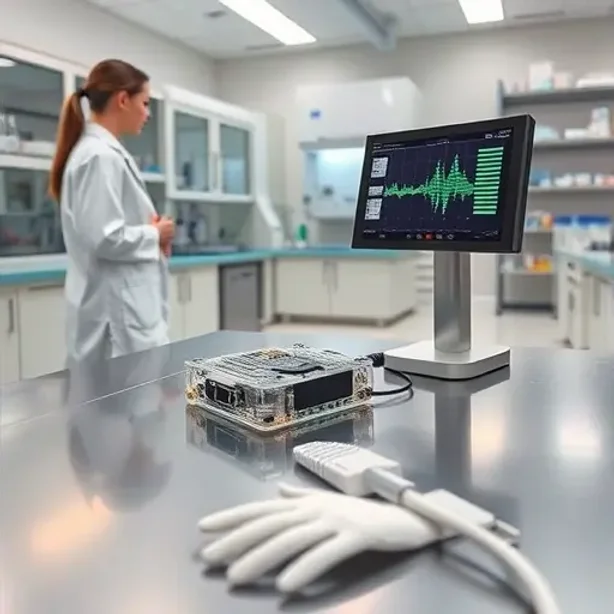
VoiceMed, an Italian digital health startup based in Rome, announces that it has raised one million euros, closing the first funding round and paving the way for clinical studies and market adoption of home monitoring solutions based on vocal biomarkers. This funding enables accelerated clinical validation and market entry.
The capital comes with public support from Invitalia and private investments from GCM Group, Padda Health, and 28Digital (formerly EIT Digital). The combination of public and private resources is crucial for clinical validation and market entry.
«In the face of an aging population, early detection of respiratory diseases is essential to reduce hospitalizations and worsening conditions»
Founded in 2020, VoiceMed develops technologies that use vocal biomarkers and artificial intelligence to support screening and monitoring of chronic respiratory conditions outside the hospital. Analyzing vocal signals, the company aims to offer early insights that guide more proactive and data-driven care.
The platform, digital-only and device-free, aims to be easily deployable in primary care, hospital-at-home care, and remote programs. The new funding will be used to accelerate clinical studies and support early market-entry activities.
In parallel to the investment, VoiceMed, together with Chiesi Group, announced a six-month pilot aimed at the early identification of respiratory diseases, including COPD. This project will evaluate the effectiveness of vocal biomarkers in real-world settings and the suitability for clinical implementation.
Arianna Arienzo, co-founder and CEO of VoiceMed, emphasized: «With the global aging of the population, it is crucial to intervene early to reduce hospitalizations and improve quality of life.»
The collaboration with Chiesi focuses on using vocal biomarkers as part of a smartphone-accessible diagnostic workflow; VoiceMed notes that, thanks to common devices, screening and monitoring can be more efficient for both patients and providers. The validation of quality of life through QALY will be an integral part of the pilot.
Chiesi Group, present in over 31 global affiliates and with more than 7,500 employees, supports research and development globally; the group’s infrastructure facilitates the adoption of new digital solutions across the healthcare continuum. The global Chiesi network is a key enabler for deploying vocal technology.
Perspectives and debate on the use of vocal biomarkers in the healthcare context
The potential to reduce reliance on on-site visits and democratize access to early diagnoses is a core value. However, wide-scale adoption requires thorough validation in real-world contexts, interoperability standards among health systems, and robust privacy policies to avoid risks of bias or uncontrolled spread of sensitive data.
Others argue that, without clear regulations and transparency about algorithms, vocal biomarkers could generate diagnostic uncertainty and technological dependency. The challenge is to balance innovation and safety, ensuring that solutions are effective, reliable, and respectful of patients.
Another point of debate concerns economic sustainability and the business model: how to monetize a non-invasive technology without placing a burden on public health systems, while maintaining patient accessibility. Open standards-based solutions, interoperability, and robust privacy measures have higher chances of scaling.
«A vocal solution could democratize diagnosis, but requires transparency of algorithms and data governance.»
«Adoption will depend on ROI proof for health systems and the ability to integrate with existing clinical workflows.»
In conclusion, innovation based on vocal biomarkers offers a promising path for remote diagnosis and monitoring, but requires rigorous validation and ethical data governance. The next phases will include real-world studies, standardization, and multi-stakeholder partnerships to turn this technology into widespread clinical practice.
Related articles
-

Scaleway adds AMD supercomputer and Nvidia GPUs in Nordics
Scaleway will open a Copenhagen GPU Zone with thousands of Nvidia GPUs for AI training and inference, alongside an AMD supercomputer in Sweden.
-

Meta's Muse AI agent accelerates the race for autonomous software
Meta launched its Muse AI agent on September 8. The app has since passed 6.6 million downloads, speeding up the race against OpenAI and Instinct.
-

OPPO to bring Manus agentic AI to Find X10 with Agent Mode
OPPO and Manus will bring agentic AI to the Find X10 series with ColorOS 17, via AI Mind Pilot's new Agent Mode, debuting at launch.
-

Artificial Intelligence: Choosing Chips, Power and Political Strategy
Access to power is one of the factors that define the adoption of artificial intelligence.