
Magazine Technology & Innovation
Edge AI in Agricultural Robotics: Innovation, Scalability, and New Opportunities for Startups and Agritech
Discover how Edge AI and agricultural robotics drive innovation with real-world cases, system interoperability, and security.
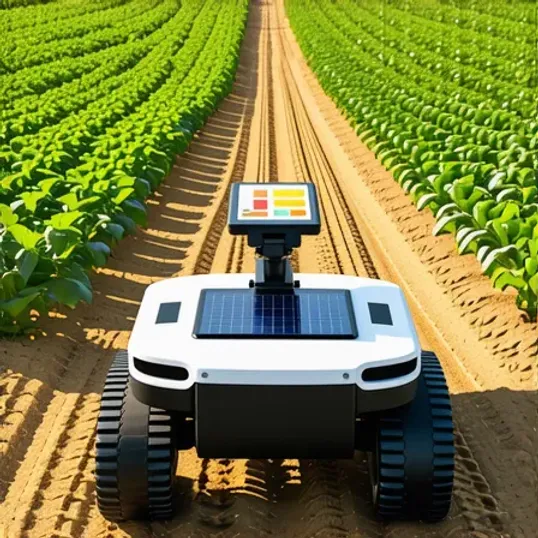
Edge AI in agricultural robotics is redefining the way we cultivate and manage crops. The integration of on-edge AI and IoT sensors enables real-time actions directly in the field. In a world where populations are growing, the ability to translate care into scalable technological systems becomes crucial. If we can’t translate care into technology, plant production—faster and cleaner—won’t be able to sustain the future.
From Promise to Real Productivity
The scale is impressive: the world already needs 18 trillion new plants each year to keep agriculture running. Without automation, meeting this demand would be impossible. Once, agricultural robots were mere stand curiosities; today autonomous weeders operate at night and reduce weed biomass, in some contexts, by almost 97%, protecting fragile soils. In high-value crops, harvesting robots are no longer seasonal jobs but reliable tools. It’s real progress, but it’s worth noting: these machines do not replace people; they move only repetitive and risky tasks, freeing human attention to make harvests more stable, sustainable, and resilient.
Why Edge Intelligence Is Agriculture’s Survival Skill
What enables this transformation is edge AI, i.e., data processing directly on the machine, at the so-called edge of the network, instead of sending data to a remote cloud server. The difference is crucial because it allows robots and sensors to respond immediately to light, soil, or crop conditions. Running lightweight models directly in the field is not a side note: it’s the difference between acting in real time and being too slow. Dust, glare, unpredictable weather conditions: no central server can match that speed. When edge AI works with IoT sensors, blockchain-based traceability systems, and drones, it transforms agriculture from a patchwork of tools into an integrated system that turns data into timely action.
Building the Invisible Infrastructure
Every visible advance in agtech rests on something invisible: a shared digital language that enables machines, sensors, and humans to collaborate. For years adoption was slow because each system spoke a different language. Today this is changing. Platforms like Agrirouter 2.0 act as neutral hubs connecting machines, apps, and sensors across brands, enabling farmers to exchange operational data securely and to flow information about planting, spraying, and harvesting.
At the same time, updated ISO standards for agricultural robotics build trust in human-machine collaboration, defining how to operate within a safe framework. This isn’t bureaucracy—it’s the invisible infrastructure without which innovation may fail to take off.
Discussion: Pros and Cons of Edge AI in Agriculture
There are no simple answers. On one hand, edge AI promises reduced latency, instant reactions, and more secure, localized data management. On the other hand, it requires initial investment in reliable hardware, training, and network governance; integrating heterogeneous systems can slow adoption, especially for small businesses. Benefits include higher productivity, reduced contamination risks, and enhanced resilience against extreme weather events, but there are maintenance costs and a need for technical skills. Moreover, dependence on platform providers and the app ecosystem requires clear governance on data privacy and ownership. For large enterprises, adopting scalable solutions can speed up decision-making and reduce volatility, but requires a cross-functional strategy spanning operations, IT, and production. It’s crucial to develop business models that make automation accessible to companies of different sizes and conditions, accompanying deployment with ongoing training and reliable infrastructure. Ultimately, edge AI in agriculture must be considered as part of a broader framework of connectivity, security, and data governance to avoid new dependencies or operational risks.
Final Reflections: The Agriculture of the Future Is Hybrid
Technology alone isn’t enough: a culture of collaboration among farmers, engineers, and policymakers is needed to define interoperable automation ecosystems. The goal is to increase global food production sustainably, reducing the risks of contamination or systemic errors, while opening new opportunities for startups and research centers. If Europe invests now in open automation and data traceability, it can lead a model of innovation less reliant on fragile imports or outdated methods. In short, investing in intelligent automation isn’t just about efficiency—it’s about resilience and the future of food.
Related articles
-
Technological scalability in practice: Oshen, Eyedentity and Redfaire
Technological scalability is the lens through which to read three concrete cases that tell how a prototype becomes an operational and commercial infrastructure.
-

Designing metrics that preserve resilience and long-term value
Metrics decide what gets built and funded: how to design measures that reward resilience and long-term value, and validate them independently before scaling.
-
Governance and Localized Compute Infrastructure in Italian Startups
Compute infrastructure localized in energetically favorable areas offers operational stability.
-

AI-driven innovation across health, security, and agriculture
AI-driven innovation converges across health, security and agriculture: what the data and the venture money say, and where founders can still find room.