
Magazine Technology & Innovation
Physical AI Sensors for Industries: FLEXOO Closes Series A and Scales Platform
FLEXOO raises Series A led by eCAPITAL and AUMOVIO to scale ultra-thin sensors and edge AI, with concrete use cases and prospects.
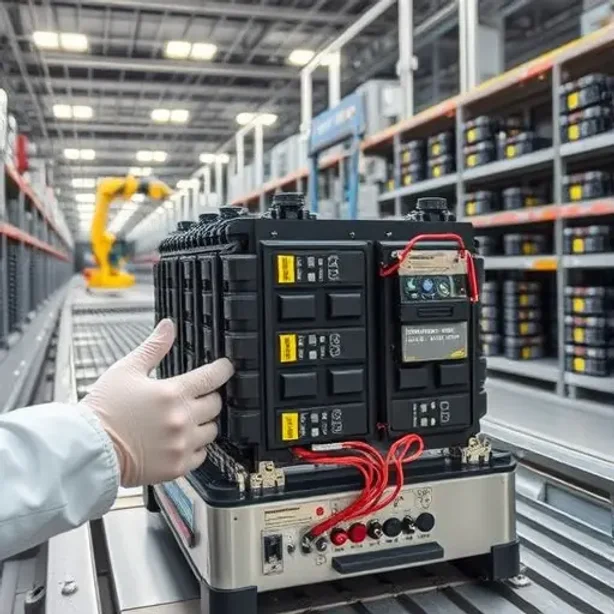
Physical AI sensors for industries represent the critical link between hardware and machine learning, as FLEXOO demonstrates with its Series A round led by eCAPITAL and AUMOVIO to scale the platform. FLEXOO, a spin-off founded in 2023, aims to provide a hardware-software data layer capable of connecting ultra-thin sensors to real-time AI models, especially in data-intensive industries like batteries and automotive.
Overview of the Announcement
FLEXOO’s platform combines ultrafine sensors and edge AI, creating an essential data layer for the industrial ecosystem. The solution is modular and can be integrated onto existing surfaces, enabling real-time data collection and advanced system control.
This technology makes Physical AI possible by combining ultrathin sensors with real-time management. The potential is significant in sectors like automotive and energy, where reliable data drive critical decisions.
Technology and Use Cases
The ability to capture real-time, cell-level data enables a more responsive AI and predictive controls, without the need for chemical redesign. FLEXOO states that its printed sensors, together with battery monitoring solutions, open possibilities for predictive maintenance and advanced state-of-charge management, impacting costs and reliability.
Collaboration is broad: the technology powers critical systems and projects that require precise data directly at the cell level. The company notes that its printed heaters and monitoring solutions can contribute to complex scenarios, including NASA-related contexts.
What drives confidence is a scalable platform technology, a stack validated from R&D to deployment, and a targeted go-to-market with a tangible client pipeline.
Impact, Validation and Roadmap
In 2026, FLEXOO targets international expansion, customer support, and fundamental IP protection for the platform. The company underscored the importance of sustained push for adoption, aiming for high-value supply contracts and global rollout of its advanced sensor solutions.
Validation with battery manufacturers and use in advanced contexts show tangible performance improvements. Secondly, the report’s description of support notes that real-time cell-level data opens new possibilities for AI control and reduced risk of failures.
Discussion and Multiple Perspectives
The central question is how real a value a cutting-edge hardware‑AI platform can deliver in real industrial contexts. On one hand, ultrafine sensors and edge AI promise reliable data, easy integration, and new possibilities for predictive maintenance. On the other hand, it’s crucial to demonstrate a clear value chain: what is the ROI for customers, what are integration costs, and what are the risks of intellectual property or interoperability between legacy systems and new architectures. It is essential to assess whether benefits in reliability and response speed justify investments in sensor infrastructure, model training, and software integration. Moreover, scalability requires effective supply chain management, hardware interface standardization, and clear governance over data ownership and use, which could impact timelines and margins. A solid go-to-market plan thus becomes a crucial element: which industry partners, which vertical markets, and what mix of direct sales and partner channels are needed to reach critical mass? In regional contexts like Europe and North America, regulatory alignment, IP, and data protection become decisive for mobilizing investments and proving long-term sustainability. Finally, reliance on capital investments can accelerate development but requires prudent risk management, competitiveness, and creation of tangible value streams for customers and investors.
Conclusion: Perspectives for Founders and Innovators
FLEXOO’s trajectory suggests that advanced sensors paired with edge AI can transform traditional sectors, but they require operational evidence, a clear value proposition, and solid partnerships. For founders and innovators, the key is to demonstrate concrete use cases, build a real customer pipeline, and value IP and co-creation with strategic partners, balancing investments, risks, and time to market.
Related articles
-

Technological scalability in practice: Oshen, Eyedentity and Redfaire
Technological scalability is the lens through which to read three concrete cases that tell how a prototype becomes an operational and commercial infrastructure.
-

Designing metrics that preserve resilience and long-term value
Metrics decide what gets built and funded: how to design measures that reward resilience and long-term value, and validate them independently before scaling.
-

Governance and Localized Compute Infrastructure in Italian Startups
Compute infrastructure localized in energetically favorable areas offers operational stability.
-

AI-driven innovation across health, security, and agriculture
AI-driven innovation converges across health, security and agriculture: what the data and the venture money say, and where founders can still find room.