
Magazine Sustainability & Green Tech
Enzymatic Recycling of Nylon 6,6: Epoch Biodesign Scales Production with AI and Enzymes
Epoch Biodesign raises €10.3M to scale enzymatic recycling of nylon 6,6 from multi-tonne to multi-kilotonnes production capacity.
Introduction
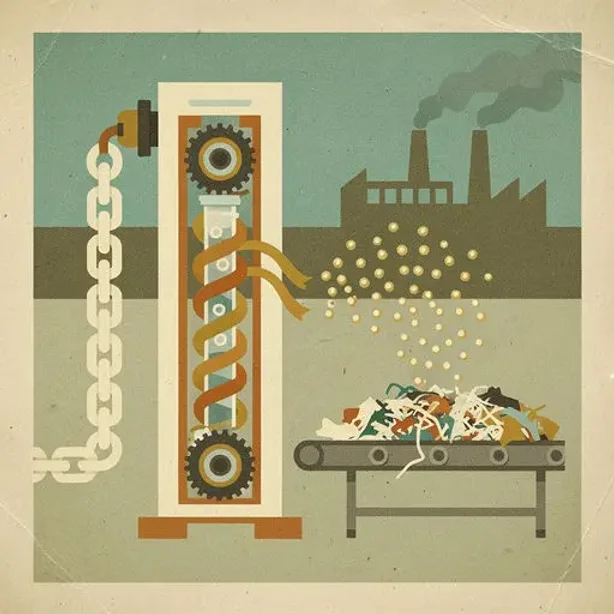
Enzymatic recycling of nylon 6,6 is moving from research into the market: Epoch Biodesign has just raised €10.3M to accelerate commercialization of its solution. The London startup combines artificial intelligence and synthetic biology to design enzymes capable of depolymerizing plastic and textile waste materials. This approach promises to transform post-consumer waste into reusable monomers, reducing reliance on virgin raw materials.
Why nylon 6,6 enzymatic recycling matters
Nylon 6,6 is a strategic material for sectors such as apparel and automotive, and today there is no scalable circular solution that returns virgin-quality materials. Epoch claims its process does not require virgin feedstock: the enzymes depolymerize the polymer down to the original monomers, specifically adipic acid and HMDA, ready to be repolymerized into nylon of virgin quality.
What the latest funding round funded
The €10.3 million raise includes participation from Lululemon, KOMPAS VC, Happiness Capital, Extantia and others, bringing Epoch’s total funding to over €43.1 million. The funding will be used to expand production capacity from the pilot plant toward a larger demonstration site, aiming to reach multi-kiloton-scale production.
How the enzymatic recycling process of nylon 6,6 works
The platform combines AI-driven design and optimization of enzymes with biorecycling processes capable of breaking the polymer at the molecular level and recovering pure monomers. In practice, the engineered enzymes recognize and cleave specific bonds in nylon 6,6, restoring the material to its constituent units without degrading its quality, enabling multiple recycling cycles.
Processing mixed materials and composite fabrics is one of the claimed advantages: Epoch says its technology can handle blends, multi-layer laminates, and coated fibers.
Industrial partnerships and supply-chain integration
Epoch works with yarn producers and brands to offer a drop-in solution that requires no supplier changes or deep modifications to the supply chain. Notable collaborations include support agreements and a memorandum with INVISTA, the global nylon 6,6 producer, aimed at developing post-consumer recycled nylon at an industrial scale.
Impact for brands and OEMs
For clothing brands and automotive OEMs, the promise is straightforward: use virgin-quality materials without relying on new feedstocks, improving supply-chain sustainability. This can reduce the environmental footprint of the finished product and simplify compliance with regulations and market expectations for high-quality recycled materials.
Scaling production: from multi-tonnes to multi-kilotonnes
The stated objective is to push the process beyond the pilot scale through a demonstration facility that validates commercial production. The funds will be used for capacity expansion, technical validation, and deepening commercial partnerships in the apparel and automotive sectors.
Operational considerations
Scaling an enzymatic process requires stringent quality control, a reliable supply of suitable waste streams, and integration with partners’ existing production lines. Managing waste streams, collection logistics, and process standardization will be critical for cost per kilogram and broader industrial adoption.
Epoch states that the process delivers ultra-low emissions and produces virgin-quality materials from mixed streams that would otherwise end up in landfills or incineration.
Critical analysis: opportunities and risks
Epoch’s case clearly shows strong opportunities along with practical challenges in industrial adoption of enzymatic recycling of nylon 6,6.
On one hand, the ability to obtain adipic acid and HMDA from textile and plastic waste represents a breakthrough: it eliminates the need for fossil feedstocks and can improve product circularity. The collaboration with brands like Lululemon and the agreement with INVISTA are positive signals that ease commercial introduction, because they enable field testing and drop-in solutions without upending supply. On the other hand, there remain critical elements: the quality and variability of waste materials can affect yields and costs, the collection supply chain must be optimized to ensure volumes and cleanliness, and scale must demonstrate economic viability compared with virgin materials. Additionally, regulation and certification of recycled materials will be decisive for acceptance by the most demanding markets.
A technological risk concerns the durability and stability of enzymes at industrial scale: even if AI speeds up design, large-scale validation may reveal limits not evident in the lab. On the commercial side, the real test will be the price per kilogram and the ability to maintain constant quality for technical fibers and automotive components. Finally, collaborating with big players is an advantage but can also bind the startup to specific requirements that slow adoption in other markets.
Practical guidance for founders and innovators interested: map the local waste value chain to test the technology on real feedstocks, define partnerships with yarn producers for integrated pilot trials, and set clear metrics for yield, emissions, and cost to compare the process with mechanical or chemical alternatives. These activities reduce technical and commercial uncertainty and accelerate adoption in target sectors.
Market outlook and strategic impact
If the process proves economical and repeatable at scale, its impact on textile and automotive supply chains could be meaningful, reducing virgin feedstock demand and associated emissions. Epoch aims to make recycled nylon 6,6 available to partners soon, leveraging AI and larger demonstration facilities to validate the commercial offering.
Key performance indicators to monitor
Among the critical KPIs to assess success are monomer yield, operating costs per kg of material processed, emission intensity, and the number of recycling cycles possible without quality loss. These metrics will define competitiveness versus virgin nylon and other recycling approaches.
Practical implications for startups and investors
Investors look for technologies that combine technical differentiators (AI + enzymes) with clear market pathways and committed supply-chain partners: Epoch appears to align both elements. For deeptech founders, the lesson is to build credible industrial proofs and vertical collaborations that reduce adoption risk.
Latest operating notes
Epoch has announced it is completing its second and largest nylon 6,6 biorecycling plant as it scales its commercial activities and global partnerships. This milestone is crucial to demonstrate process repeatability and attract additional industrial customers.
Final takeaway for innovators
Enzymatic recycling of nylon 6,6 represents a promising blend of science and market opportunity: turning the promise into scale requires demonstration plants, optimized waste-supply chains, and measurable metrics for yield and cost. Founders and managers pursuing circular solutions should watch Epoch’s progress as a practical case study on bringing a biotech technology from pilot to industrial market.
Sources and context
The information is based on Epoch Biodesign’s official announcements and partnerships reported in the company communications. For more details, consult the company’s official materials and the investors’ notes from those who participated in the round.
Related articles
-

Sustainable Innovation Across Agriculture, Health and Territory
Targeted investments strengthen regional attractiveness and can generate a cascading impact.
-

How to make self-produced energy investable
Storage systems must absorb at least 75% of the energy produced by the connected plant, a condition that favors integrated production-and-storage projects.
-

Sustainability and Community as a Product: Strategies for Impact
Campaigns that link product and social value shift attention from ownership to collective action.
-
Kylian Mbappé joins On and the rise of verified carbon accounting
At the same time the market for carbon accounting software is exploding because regulators demand verifiable numbers.