
Magazine Technology & Innovation
How Pandora's Telescope Works: Exploring Exoplanets
Meet Pandora, NASA's compact telescope: how it observes exoplanet atmospheres and its synergy with Webb under Pioneers program.
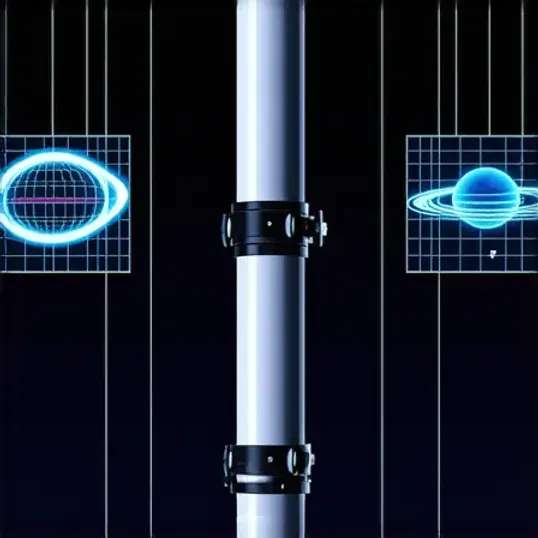
The Pandora telescope has been designed to offer a new perspective on observing exoplanet atmospheres. Operated by NASA’s Goddard Space Flight Center, in collaboration with Lawrence Livermore National Laboratory and the University of Arizona, Pandora is classified as a SmallSat: a nimble, low-cost mission compared with large observatories, conceived to address targeted scientific questions and provide concrete data on the atmospheres of planets outside the Solar System.
What is Pandora?
Pandora focuses on about 20 planets already discovered by previous missions, offering a detailed analysis and an observing perspective that a large telescope cannot always guarantee. Pandora integrates sensors for visible and infrared light and follows an observation strategy aimed at deriving the atmospheric composition from the light spectrum, with particular attention to substances such as hydrogen and water vapor, key indicators of potential habitability and traces of conditions favorable to life.
How Pandora Works?
Pandora observes planets during transit, i.e., when the planet passes across the star’s line of sight. During this passage, starlight filters through the planet’s atmosphere, and Pandora interprets the slight variations in the spectrum to deduce its chemical composition. To reduce disturbances caused by stellar activity, Pandora is programmed to observe the same star for 24 consecutive hours, returning to monitor it about 10 times a year, for a total of about 240 hours of observation per target. In this way, it is possible to map the rotation of star spots and distinguish the planet’s signals from those of the star, eliminating false positives in detecting traces of water and other atmospheric components.
Pandora and Webb: A Strategic Synergy
In orbit, giants such as the James Webb Space Telescope coexist. Pandora does not intend to replace Webb, but to offer a complementary function: providing data already filtered from stellar interference and maintaining continuous observing coverage, useful when Webb cannot monitor a target for long periods. This approach facilitates the exploration of small rocky planets, where signals of habitability are more likely to be found, and enhances Webb’s ability to analyze potentially habitable worlds, accelerating potential discoveries and scientific interpretations.
The Pioneers Program: a New NASA Model
Pandora is part of NASA’s Astrophysics Pioneers program, a different approach from traditional multi-mission projects. The Pioneers prioritize rapid and affordable missions with clear scientific goals and urgent questions. This model allows testing innovative technologies and launching targeted instruments that complement flagship missions without overburdening budgets, even though it means accepting slightly higher risk than usual standards. The idea is to offer a platform for technological innovation, rapid prototyping, and the use of modular solutions that can be attached to flagship missions or reused in similar contexts globally. For startups and technology companies, Pandora-Pioneers represents a source of inspiration on how to balance agility, cost, and scientific impact.
Debate and Diverse Perspectives
Beyond the positives, the Pandora-Pioneers approach raises complex questions. On one hand, investing in agile, low-cost missions can democratize access to space, accelerating the prototyping of new technologies and generating data useful for startups operating in the field of scientific instruments. On the other hand, using models less tied to multi-year plans implies risks in management, data governance, and reliability of results. Critics might demand greater rigor in standardization, independent data validation, and transparency of decision-making processes. Proponents, instead, see Pandora as concrete evidence of how the public sector can stimulate innovation through targeted funding models, partnerships among universities, laboratories, and industry, and a culture of rapid iteration. If data were open and accessible, startups and independent researchers would be encouraged to develop analysis, visualization, and interoperability tools, fostering a more dynamic ecosystem. A balance between risk management, data quality, and scientific openness could become the model for other technology sectors, promoting responsible and reproducible innovation.
Toward New Opportunities for Exploration
In conclusion, Pandora is not just a new observing tool: it is a concrete demonstration of how speed, modularity, and collaboration among agencies, universities, and industry can guide space exploration in ways that also benefit the innovation ecosystem. If the Pioneers approach proves capable of delivering reliable scientific answers with modest investments, the tech landscape as a whole could benefit: from the design of ultra-light sensors to advanced cloud data analysis, up to public-private participation models in space that spur new entrepreneurial ideas and new technological solutions.
Related articles
-

Technological scalability in practice: Oshen, Eyedentity and Redfaire
Technological scalability is the lens through which to read three concrete cases that tell how a prototype becomes an operational and commercial infrastructure.
-
Designing metrics that preserve resilience and long-term value
Metrics decide what gets built and funded: how to design measures that reward resilience and long-term value, and validate them independently before scaling.
-

Governance and Localized Compute Infrastructure in Italian Startups
Compute infrastructure localized in energetically favorable areas offers operational stability.
-

AI-driven innovation across health, security, and agriculture
AI-driven innovation converges across health, security and agriculture: what the data and the venture money say, and where founders can still find room.